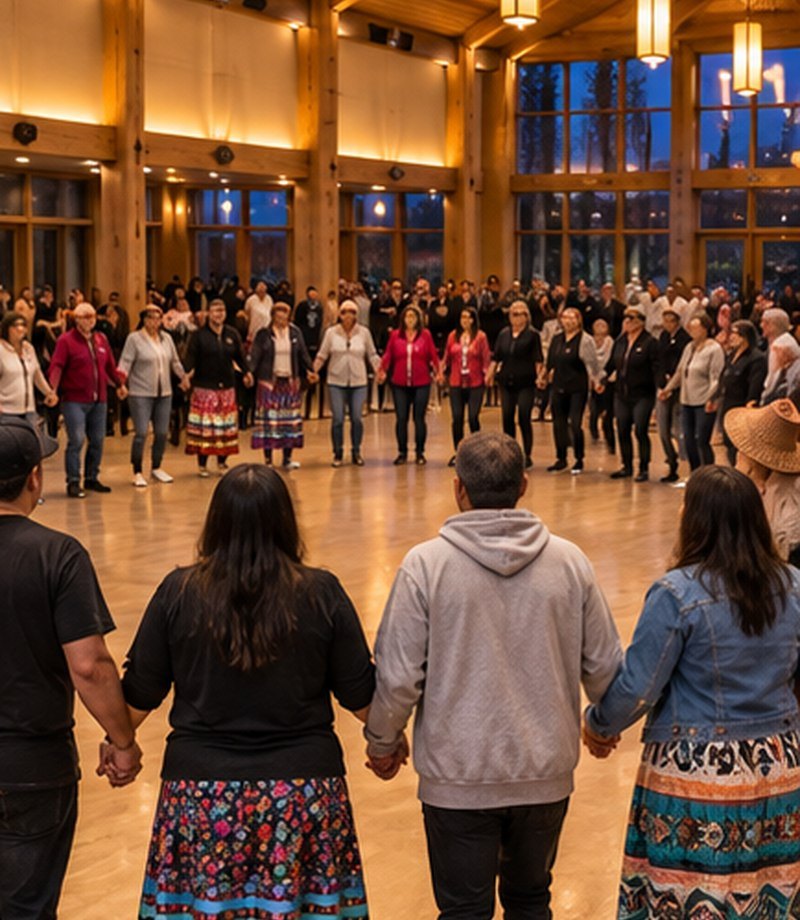
In a Round Dance, people hold hands and side-step clockwise around singers who play hand drums in the centre. Anyone may join. Round Dances are held especially in winter on the Prairies — for memorials, to honour loved ones and for community celebration — and they often last all night.
The Round Dance is a social and ceremonial dance of many Plains peoples, including the Cree, Saulteaux, Dakota and Nakota. Traditionally it honours the spirits of those who have passed on; the circle reminds dancers that everyone is equal and connected. Ceremonial Round Dances begin with a pipe ceremony and a feast and follow protocols set by the host family; social ‘round dance songs’ are also sung at powwows and concerts, and groups such as Northern Cree have recorded many of them. In December 2012 the Round Dance became the symbol of the Idle No More movement. On 17 December, more than 500 people joined a flash-mob Round Dance around the Christmas tree at the Cornwall Centre mall in Regina, Saskatchewan, and the idea spread to malls and squares across Canada and beyond. The welcoming circle showed that Indigenous cultures were strong and present.