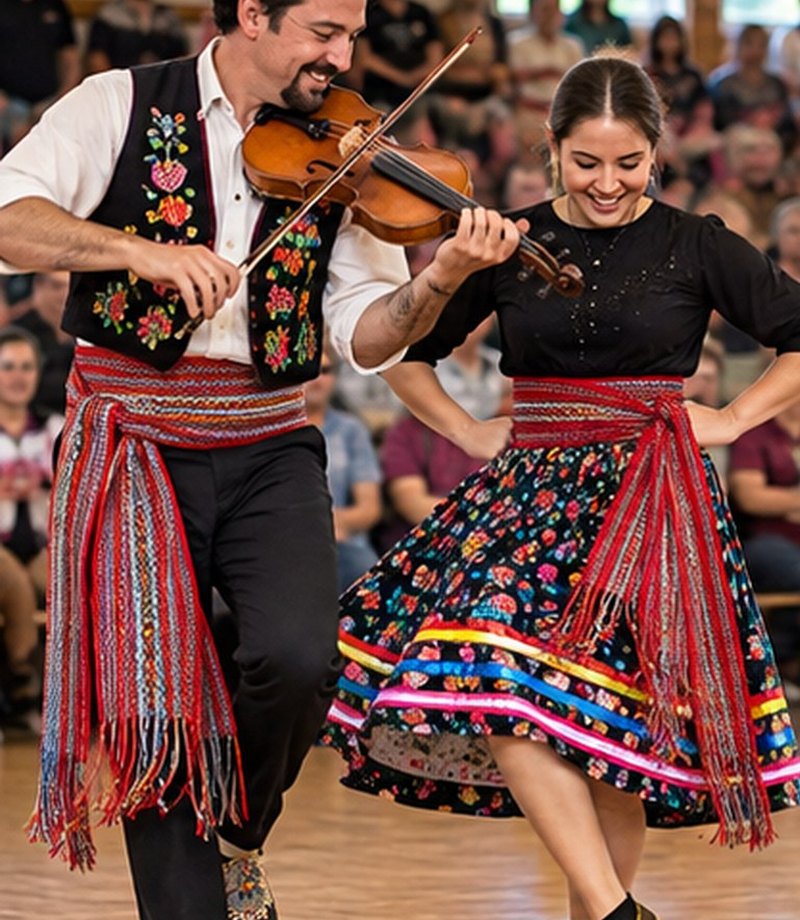
The Red River Jig is the signature dance of the Métis Nation. A fiddler plays a tune with two alternating parts — a ‘high’ part and a ‘low’ part — and at every change the dancers switch to a new fancy step. Fast, light and close to the floor, it is danced at family gatherings, Métis festivals and jigging contests across the Prairies.
The Métis are a distinct Indigenous people who emerged in the 18th and 19th centuries around the fur trade, from the families of First Nations women — especially Cree, Ojibwe and Saulteaux — and French-Canadian and Scottish men. Their music and dance mixed Indigenous rhythm and footwork with Scottish and French-Canadian fiddle tunes, reels and jigs. The Red River Jig is named after the Red River settlement (today Winnipeg), the historic heart of the Métis homeland. It is a dance of pride: a good jigger keeps the upper body calm while the feet ‘tear up the floor’, and audiences cheer each new step. Sashes (the ceinture fléchée), beaded vests and moccasins or hard-soled shoes are part of the look. Families, Métis organizations and youth dance troupes keep it alive, and jigging competitions are a highlight of Back to Batoche Days in Saskatchewan and Festival du Voyageur in Winnipeg.