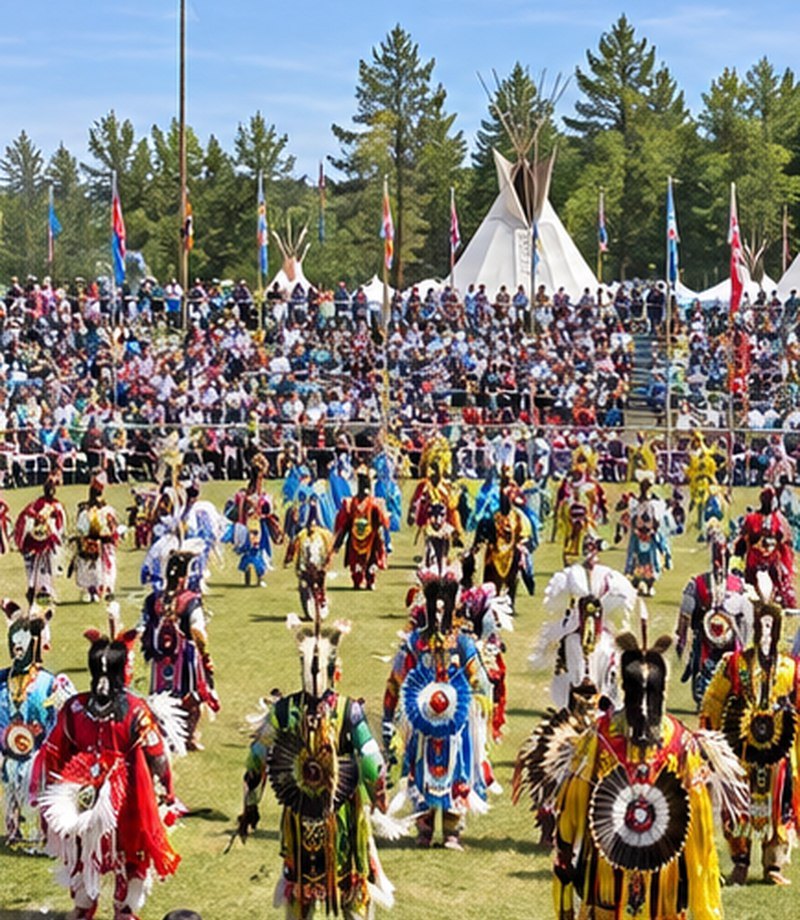
A powwow is a gathering hosted by Indigenous communities where dancers in regalia move around a circular arena to songs sung by drum groups. Visitors see a Grand Entry, honour songs, intertribal dances open to everyone and contest categories such as Men’s Traditional, Fancy, Grass, Jingle Dress, Fancy Shawl and Women’s Traditional.
Between 1885 and 1951, Canada’s Indian Act banned the potlatch and, from 1895, many other ceremonies and dances. Communities kept their songs alive in secret and through fairs and exhibitions. After the bans were dropped in 1951, powwows grew quickly; today hundreds are held every year, from small community gatherings to large events in arenas. Powwows are living community events, not shows. The arena is blessed, an MC (master of ceremonies) explains what is happening, and the Arena Director keeps order. Regalia is never called a ‘costume’: beadwork, feathers and jingles are often made by relatives and carry personal meaning. Visitors are welcome at public powwows, but should stand for honour songs, listen to the MC, ask before photographing a dancer and never touch regalia. Some songs, and some gatherings, are not to be recorded at all.