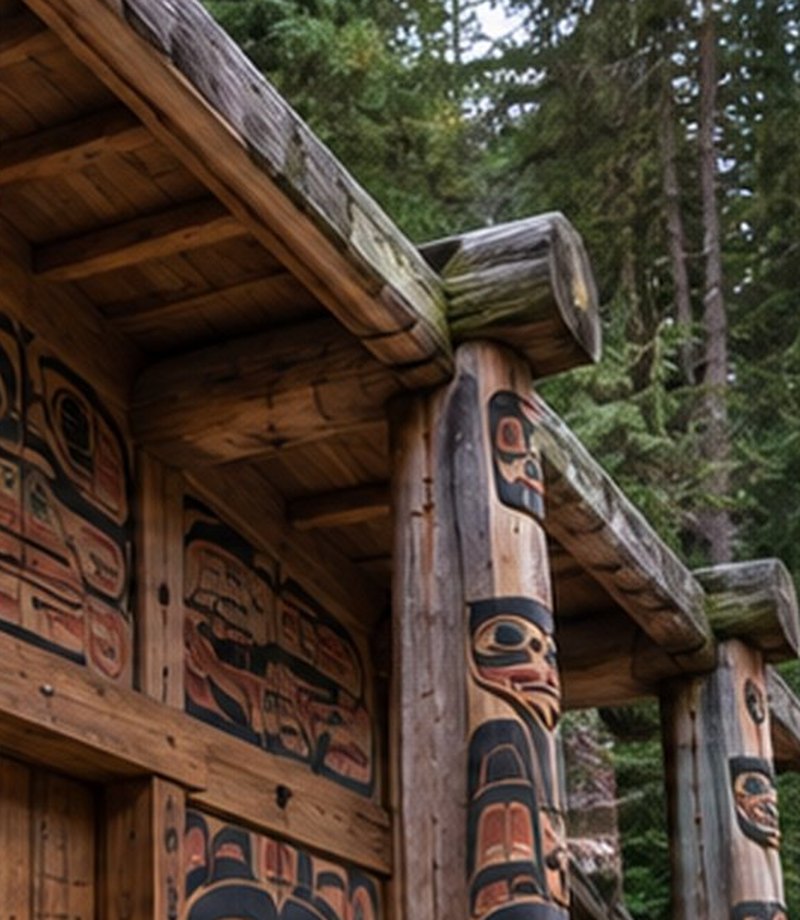
On the Pacific coast of British Columbia, Nations such as the Kwakwaka’wakw, Haida, Nuu-chah-nulth, Tsimshian, Heiltsuk and Coast Salish peoples dance in potlatches and feasts. Carved masks, cedar-bark regalia and red-and-black button blankets bring crests and ancestral stories to life. Many dances are owned by families and may only be performed by those with the right to do so.
The potlatch is a feast in which a host family marks names, marriages, memorials or the raising of a totem pole, and shows its inherited songs and dances to guests who witness them. Canada banned the potlatch in the Indian Act from 1885 until 1951. In 1921, after a large potlatch at Village Island, officials arrested participants and seized hundreds of masks and regalia, which were sent to museums and collectors. After decades of work by the Kwakwaka’wakw, much of that collection came home. The U’mista Cultural Centre opened in Alert Bay in 1980 to care for it — ‘u’mista’ means the return of something important. Today potlatches are held again in Big Houses such as the one in Alert Bay, and dance groups share public dances at festivals and museums. Visitors should remember that a public performance is not the same as a ceremony, and should never buy or copy family crests and masks.