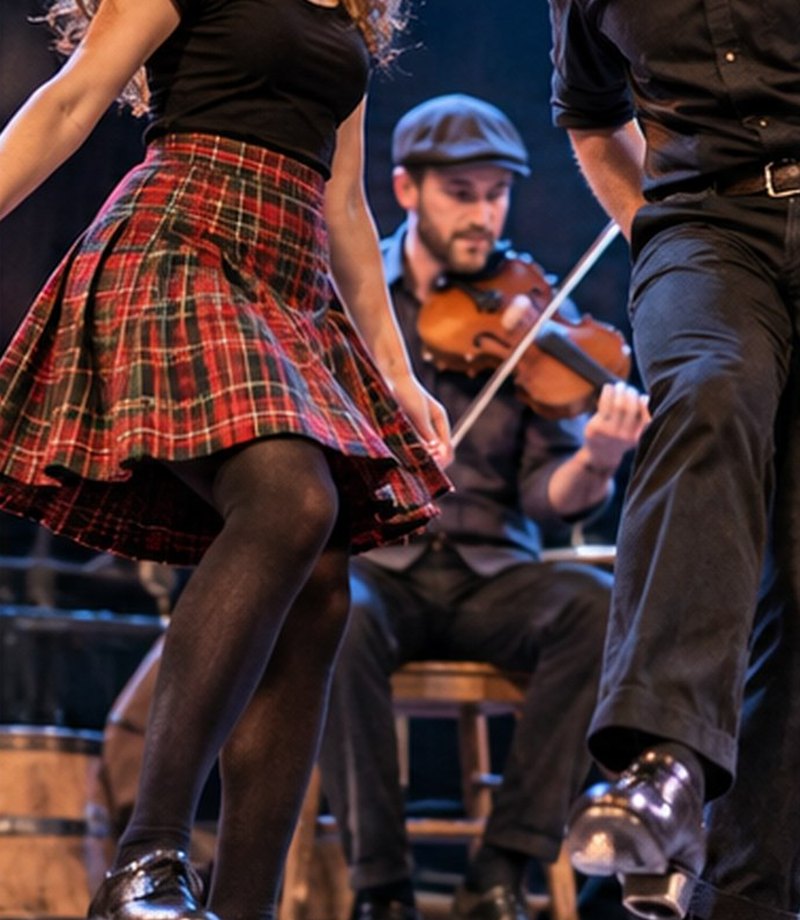
Cape Breton step dancing, brought by Scottish Gaels to Nova Scotia, is danced with relaxed arms and quick, low steps that ‘play’ the rhythm of the fiddle tune — strathspeys and reels. In eastern Ontario, Ottawa Valley step dancing grew from Irish, Scottish, French-Canadian and Indigenous influences into a lively, more showy style with high kicks and competitions.
Thousands of Highland Scots, many speaking Gaelic, settled Cape Breton Island in the late 18th and 19th centuries. They brought fiddle music and an older, ‘close-to-the-floor’ style of step dancing that later disappeared in Scotland itself, so Cape Breton became its living archive. Dancers step at square dances, ceilidhs and concerts, and the fiddler and dancer listen closely to each other. The Gaelic College at St. Ann’s, founded in 1938, teaches step dance, fiddle and Gaelic. In the Ottawa Valley, lumber camps and kitchen parties mixed the steps of Irish, Scottish and French-Canadian workers. The resulting style is energetic and often competitive: Pembroke, Ontario, hosts a long-running fiddling and step-dancing championship, and Ottawa Valley dancers such as April Verch have taken it to stages worldwide. Across Atlantic Canada — in Newfoundland and Labrador, Prince Edward Island and Acadian communities — kitchen parties still mix step dancing with sets and songs.