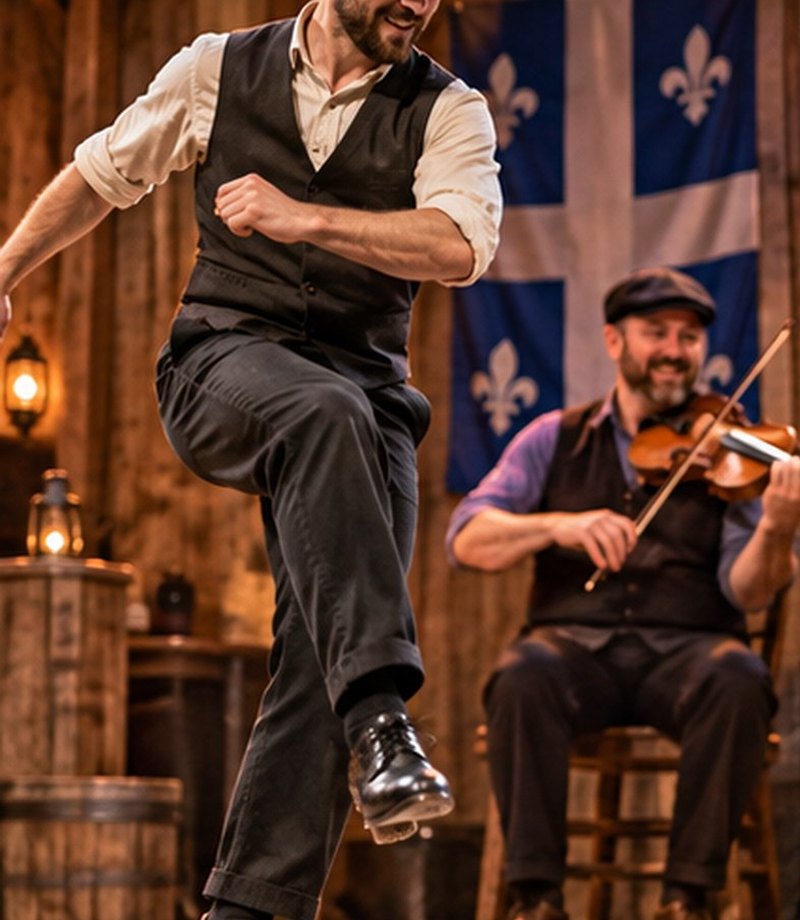
La gigue is Québec’s traditional step dance: rapid, close-to-the-floor footwork that turns the dancer into a percussion instrument. It is danced solo or in turn at veillées (evening gatherings), alongside set dances called by a câleur — reels, quadrilles and contredanses — to fiddle, accordion and the ‘podorythmie’ of musicians tapping their feet while they play.
French settlers brought contredanses, quadrilles and step dancing to New France in the 17th and 18th centuries; Scottish and Irish neighbours later added reels and jigs. In rural Québec the long winters made the veillée — music, dancing, songs and stories in a family kitchen — the centre of social life, especially during the holiday season and at the Mardi gras. The Catholic Church sometimes frowned on dancing, but the gigue survived in homes and halls and was revived on stage from the 1970s by folk groups and bands such as La Bottine Souriante. Today young ‘gigueurs’ mix old steps with new rhythms, schools and folk ensembles teach it, and festivals such as Mémoire et Racines in Lanaudière and the Carnaval de Québec keep the veillée tradition public.