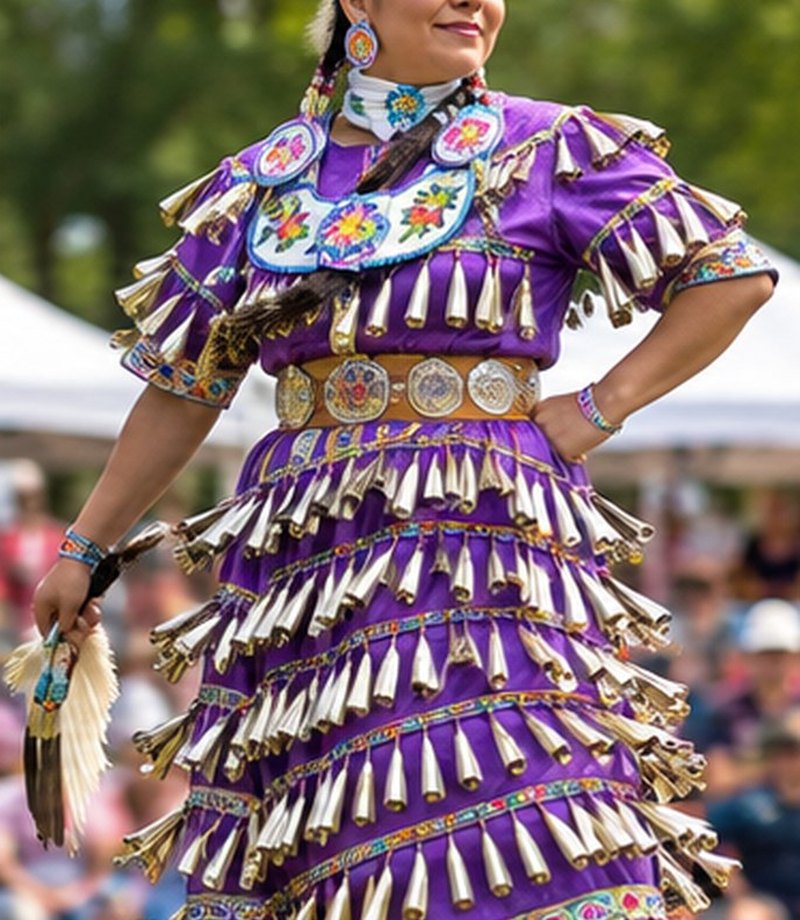
In the Jingle Dress Dance, women and girls wear dresses sewn with hundreds of rolled metal cones called ziibaaska’iganan. Dancing with light, precise footwork close to the ground, never crossing the feet or turning in a full circle in the traditional style, they make a sound like rain — a sound many families describe as a prayer for healing.
The dance comes from the Anishinaabe (Ojibwe) people of the western Great Lakes. Its origin stories — told by families at Whitefish Bay in Ontario and at Mille Lacs in Minnesota, among others — usually involve a dream: a father or grandfather whose daughter was gravely ill was shown how to make the dress, and the girl recovered as she danced. Many place this around the 1918–1919 influenza pandemic. From the Ojibwe the Jingle Dress spread to the Dakota, Lakota and Cree, and by the 1980s it was one of the most popular categories at powwows. During the COVID-19 pandemic in 2020, dancers across Canada and the U.S. posted ‘healing dances’ online, returning the dress to its original purpose. Out of respect, visitors should not imitate the dress or treat it as fancy dress.