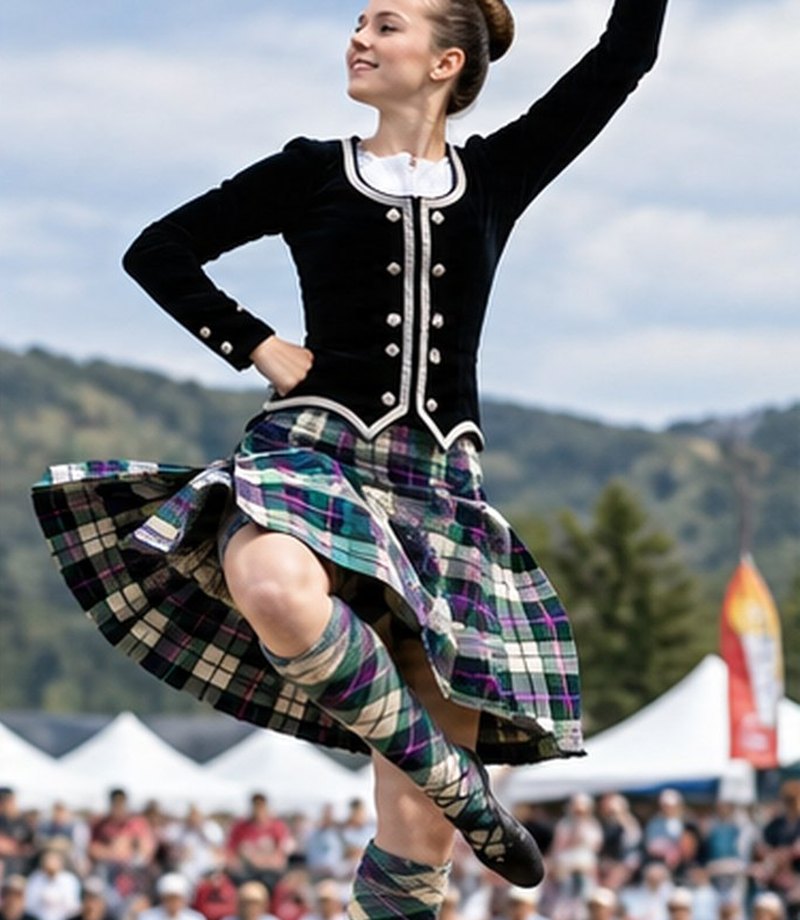
Highland dance is a solo competitive dance from Scotland, performed on the balls of the feet to bagpipe music. Dancers in kilts or tartan perform set dances such as the Highland Fling, the Sword Dance (Ghillie Callum) and the Seann Triubhas, judged on timing, technique and deportment. Canada has one of the largest Highland dance communities in the world.
Scottish settlers, soldiers and fur traders brought Highland dancing to Canada, and Highland Games became popular community festivals in the 19th century. The Antigonish Highland Games in Nova Scotia, first held in 1863, are among the oldest continuous Highland Games outside Scotland, and the Glengarry Highland Games at Maxville, Ontario, held since 1948, are among the largest. Today ScotDance Canada organizes competitions and national championships, and dancers train in studios from Halifax to Victoria. Nova Scotia — ‘New Scotland’ — has an especially strong tradition, and the Royal Nova Scotia International Tattoo in Halifax features a large Highland dance team. Most competitive dancers are girls and young women, although the tradition began as a men’s display of strength and agility.