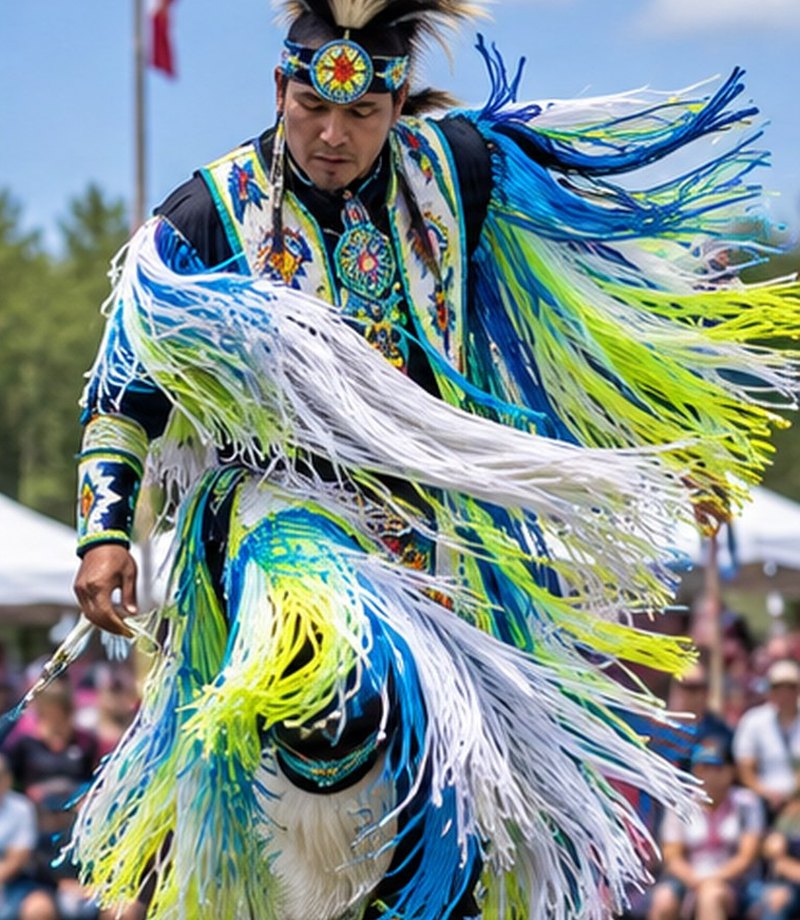
Grass dancers wear regalia covered in long fringes of yarn or ribbon that sway like prairie grass. Their dance is smooth and balanced: whatever one side of the body does, the other side repeats, with shoulder shimmies, sweeping leg movements and quick changes on the honour beats.
The Grass Dance is one of the oldest powwow dances and is linked to the warrior societies of the northern Plains, including the Omaha, Ponca and Dakota peoples, from whom it spread north into what is now Canada. One teaching says grass dancers once went out first to flatten the tall grass so that a gathering could take place; others connect the dance to healing and to braids of sweetgrass tucked into a dancer’s belt. Old-style grass regalia used real grass; today fringe in bright colours makes the motion visible from far away. On the Prairies the category is especially strong, and dancers often begin as small children. Because the movements are mirrored left and right, the dance is about balance in life as much as athletic skill.