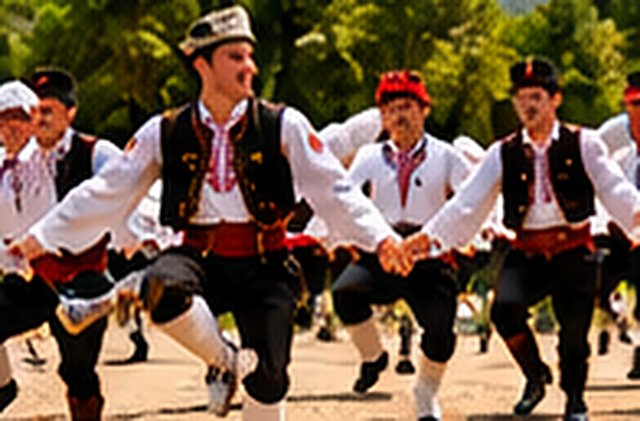
An asymmetrical chain dance commonly counted 5/8 as 2+3, with regional variations.
The contrast between short and long pulse groups gives Paydushko its distinctive lilting, almost limping feel. Similar names and meters cross national borders, so local versions matter. Paydushko is shared among several Balkan dance cultures. Bulgarian village and modern folk-club repertoires show different formations, tempi and arm positions rather than one standardized form. Listen for a quick two-pulse unit and a slower three-pulse unit. Step-hop or stepping patterns may fit the phrase; study the chosen village tradition before describing exact footwork.