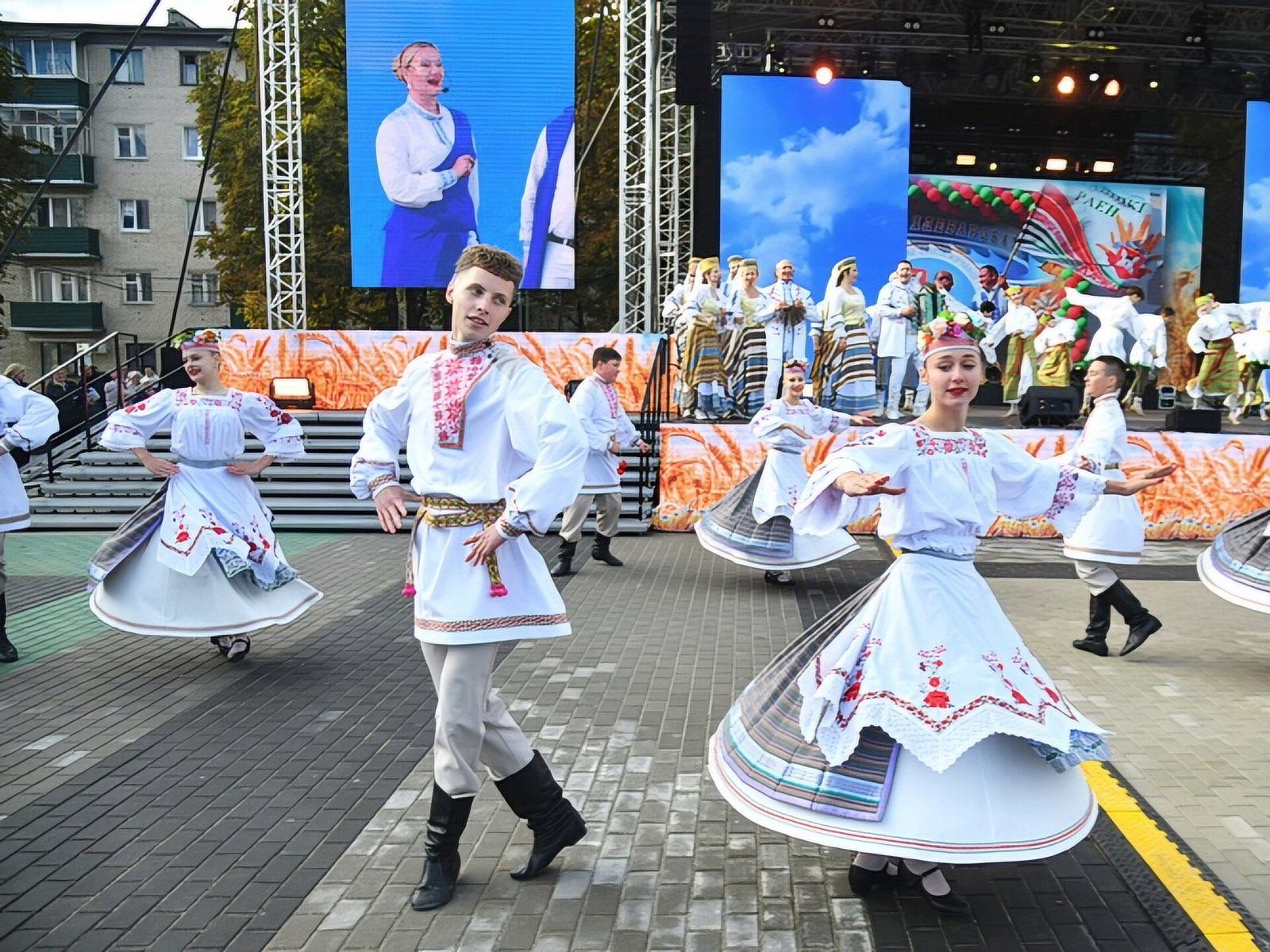
Polka-Yanka is the best-known Belarusian polka: couples hop, stamp out the rhythm and spin around a circle to the folk song 'Yanka'. It is often the first Belarusian dance children learn.
The polka was born in Bohemia around the 1830s and in the following decade swept the ballrooms of Europe. From towns and manor houses it reached the Belarusian countryside in the second half of the 19th century, together with quadrilles, and it took root easily: its lively 2/4 was the same metre as most native dances. Villages soon made it their own, and collectors recorded a whole family of Belarusian polkas — Trasukha ('the shaker'), Vyazanka, Shmorgalka and many named after towns, such as Barysaŭskaya or Vitsyablyanka. Belarusian dance historians even argue that this rich village tradition influenced polka choreography far beyond the country. Yanka — the Belarusian form of the name Jan or John — is the hero of the song that gives Polka-Yanka its name. As in Lyavonikha, the dance follows the song: couples move around a circle with polka steps, stamp the rhythm at the end of phrases, spin together and change direction with the verses. The mood is spirited but friendly, so everybody can join in. In the 20th century Polka-Yanka entered the repertoire of folk-stage ensembles and became a staple of school dance lessons. From 1969 the band Pesniary, led by Uladzimir Mulyavin, brought Belarusian folk songs to a huge pop audience, helping keep tunes like these in everyone's ears.