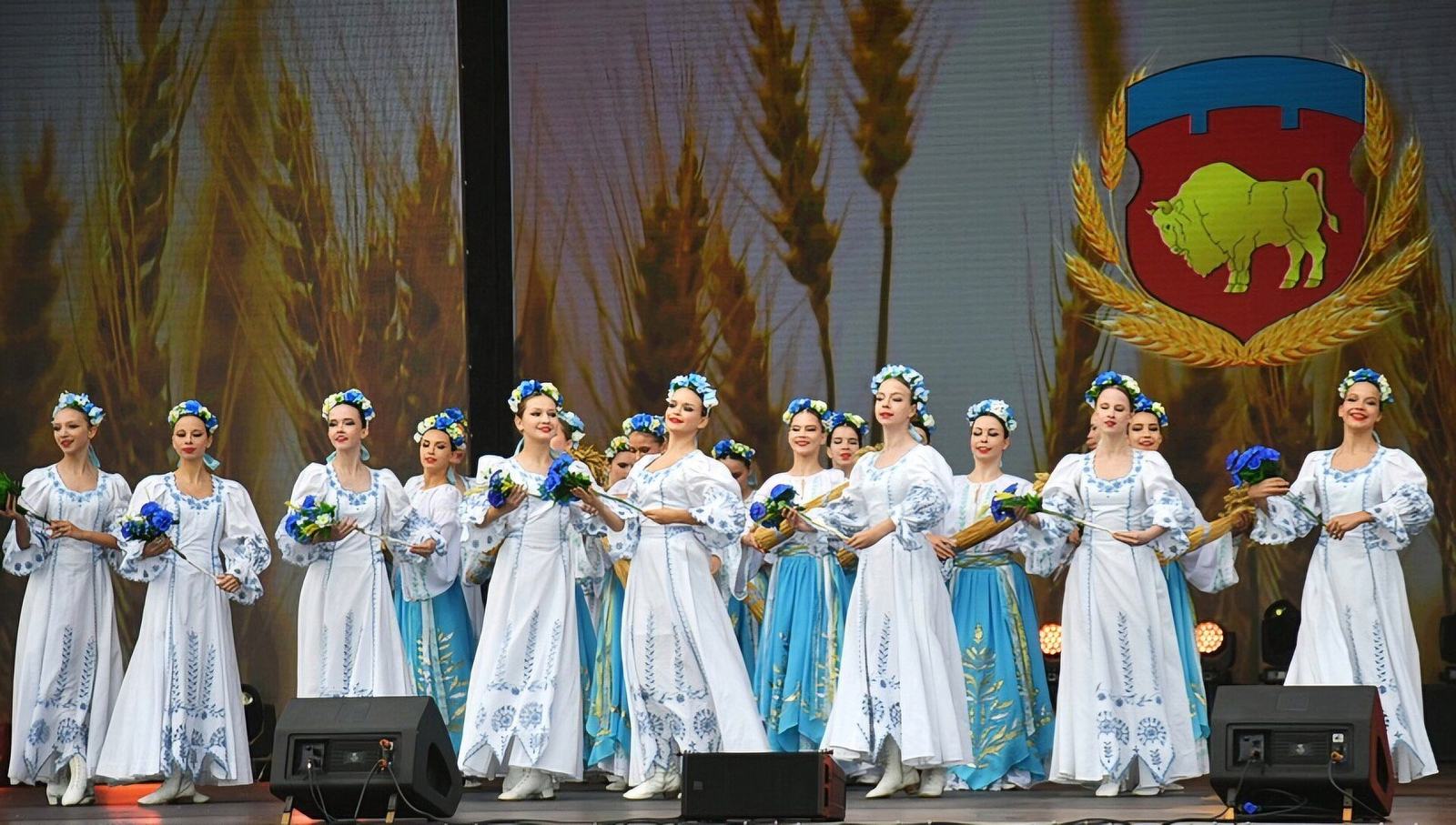
Lyanok — 'little flax' — shows in movement how flax is sown, pulled, beaten, spun and woven into linen. Flax, with its sky-blue flowers, has long been an emblem of Belarus, and this work dance honours the labour behind every white shirt and embroidered towel.
For centuries flax was one of the main crops of the Belarusian countryside. From it women made the linen of everyday shirts and dresses and of the rushniki, the embroidered ritual towels used at weddings, births and in the home's icon corner. Turning flax into cloth took a whole year of work — sowing in spring, pulling the plants by hand in summer, retting and drying them, beating and scutching the stems, combing the fibres, spinning through the winter and finally weaving on the loom. Much of it was done together, with songs, and in winter girls brought their spindles to the vyachorki, the evening gatherings where spinning, singing and dancing went hand in hand. Lyanok belongs to the illustrative dances that act out this work, like Taukachyki or the dances of the reapers. Its gestures follow the flax cycle: wide sweeping arms for sowing, deep bends for pulling, rhythmic stamps for beating, turns for the spinning wheel and interlacing lines that look like warp and weft. In the 20th century Belarusian choreographers developed it into stage suites, and today Lyanok is danced by folk ensembles, arts colleges and children's groups — often with white linen costumes and touches of blue that recall a field of flax in bloom.