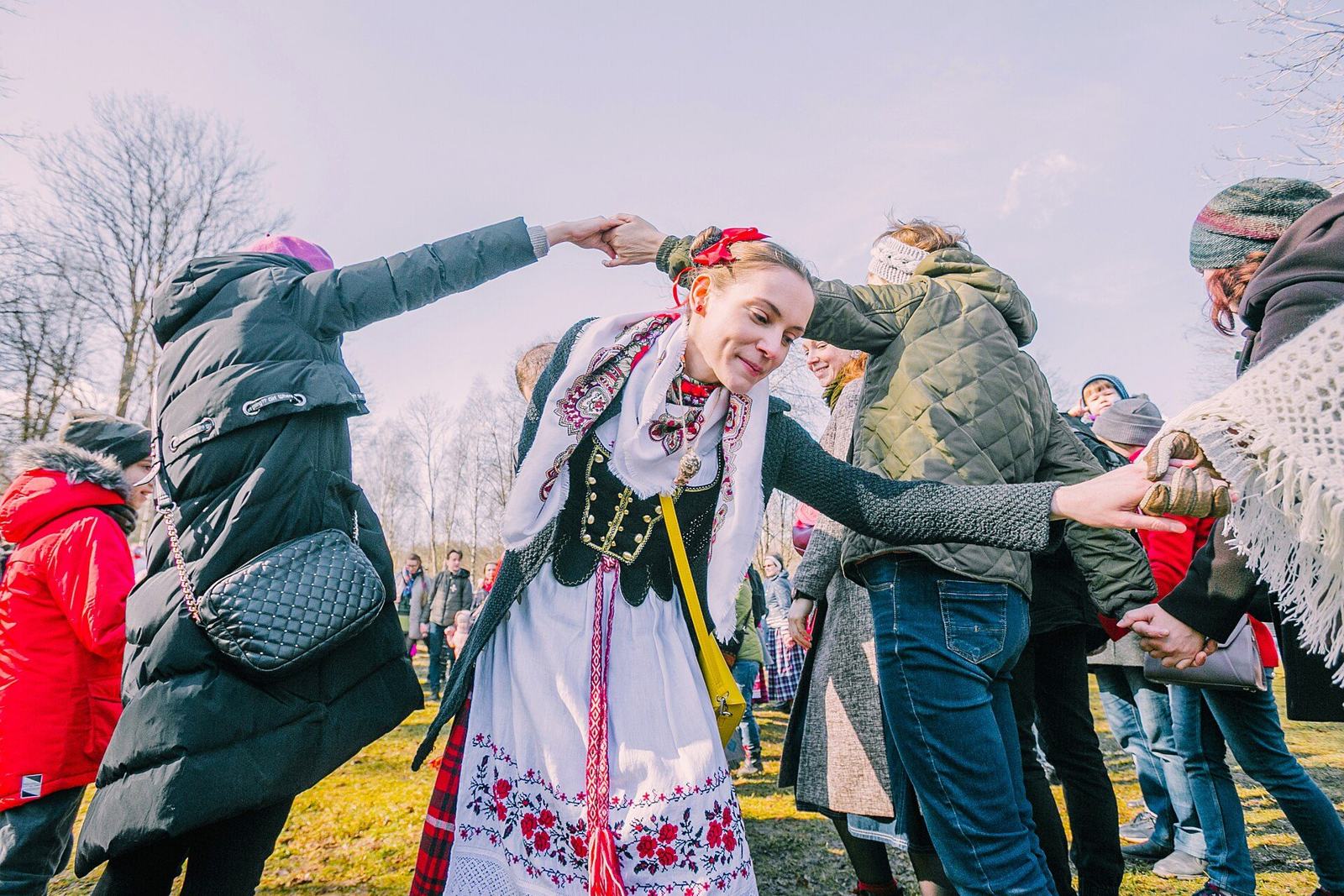
The karahod — khorovod in Russian, also simply kola, 'the circle' — is the oldest form of Belarusian dance: a ring of singers moving together through spring, midsummer and harvest rites. The Yuraŭski Karahod of Pahost village is on UNESCO's list of heritage in need of urgent safeguarding.
Scholars believe round dances took shape among the East Slavs towards the end of the first millennium AD, and in Belarus they remained part of village ritual until today. A karahod joins three things: a song, a ritual or playful action, and a pattern on the ground. Researchers distinguish song karahods, with simple circles, lines and 'snakes' that loosely follow the text; game karahods, with soloists, changes of tempo, jumps and whirling; and dance karahods, where the movement leads and the song accompanies. They were usually sung by women and girls without instruments. The circles followed the farming year: spring songs calling the warmth back, St George's Day (Yur'ya) when cattle were first driven to pasture, Kupalle — the midsummer night of 6–7 July with bonfires, flower wreaths floated on the river and the search for the magic fern flower — and the harvest. In Pahost, a village in the Zhytkavichy district of the Gomel region, the spring rite of the Yuraŭski Karahod is still held every 6 May. Women bake a ritual loaf called the karahod, girls weave periwinkle wreaths, and a procession with an icon, a ritual star, a rake hung with a green apron and the bread passes through a 'gate' formed by a towel into the fields. There the women sing spring songs and dance the karahod around the men holding the ritual objects, the apron is changed from green to red and a crust of bread is buried to ask for a good harvest; then the circle returns to dance by the houses. UNESCO inscribed the rite in 2019.