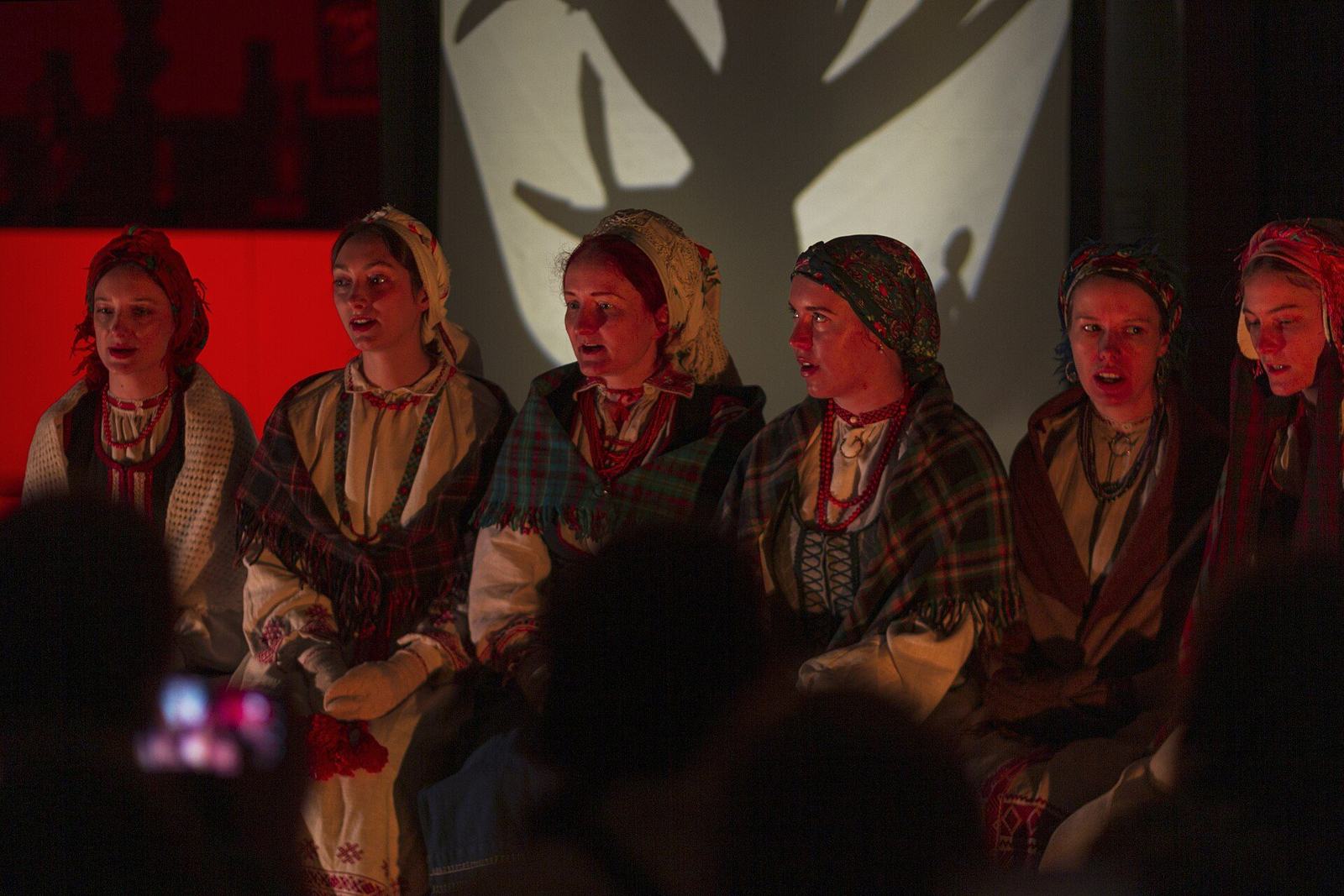
Kalyady is Belarus's midwinter festival: bands of carollers with a star, masks and a dancing 'goat' go from house to house, singing, dancing and wishing a good year. In the village of Semezhava the young men's 'Kalyady Tsars' performance was inscribed by UNESCO in 2009.
Kalyady grew from ancient rites of the winter solstice and later merged with Christmas, so it is celebrated twice: from Catholic Christmas (25 December) and from Orthodox Christmas (7 January) until the Epiphany. On its evenings groups of kalyadoŭshchyki — carollers — walk from house to house carrying a big star on a pole, singing kalyadki that praise the hosts and wish them a rich harvest, health and good marriages, and receiving treats in return. Masked figures play the old games: a bear, a 'gypsy', an old man and old woman, and above all the Kaza, the goat, whose dance is the heart of the visit — it stamps, bows, falls 'dead' and springs back to life, a playful image of nature dying in winter and returning in spring that promised a fertile year. In Semezhava, in the Kapyl district of the Minsk region, Kalyady has a unique form. On the Belarusian New Year by the old calendar (the night of 13–14 January) young men chosen as Tsars perform the folk play Tsar Maximilian. In bright uniforms they visit the houses of unmarried girls, act out comic and heroic scenes, and receive good wishes and gifts; the comic pair of an old man and old woman (dzed and baba) banter with the audience, the scenes mix tradition with jokes about modern life, and the procession continues through the night by torchlight, with music and dancing in the houses. UNESCO inscribed the rite on its Urgent Safeguarding List in 2009.