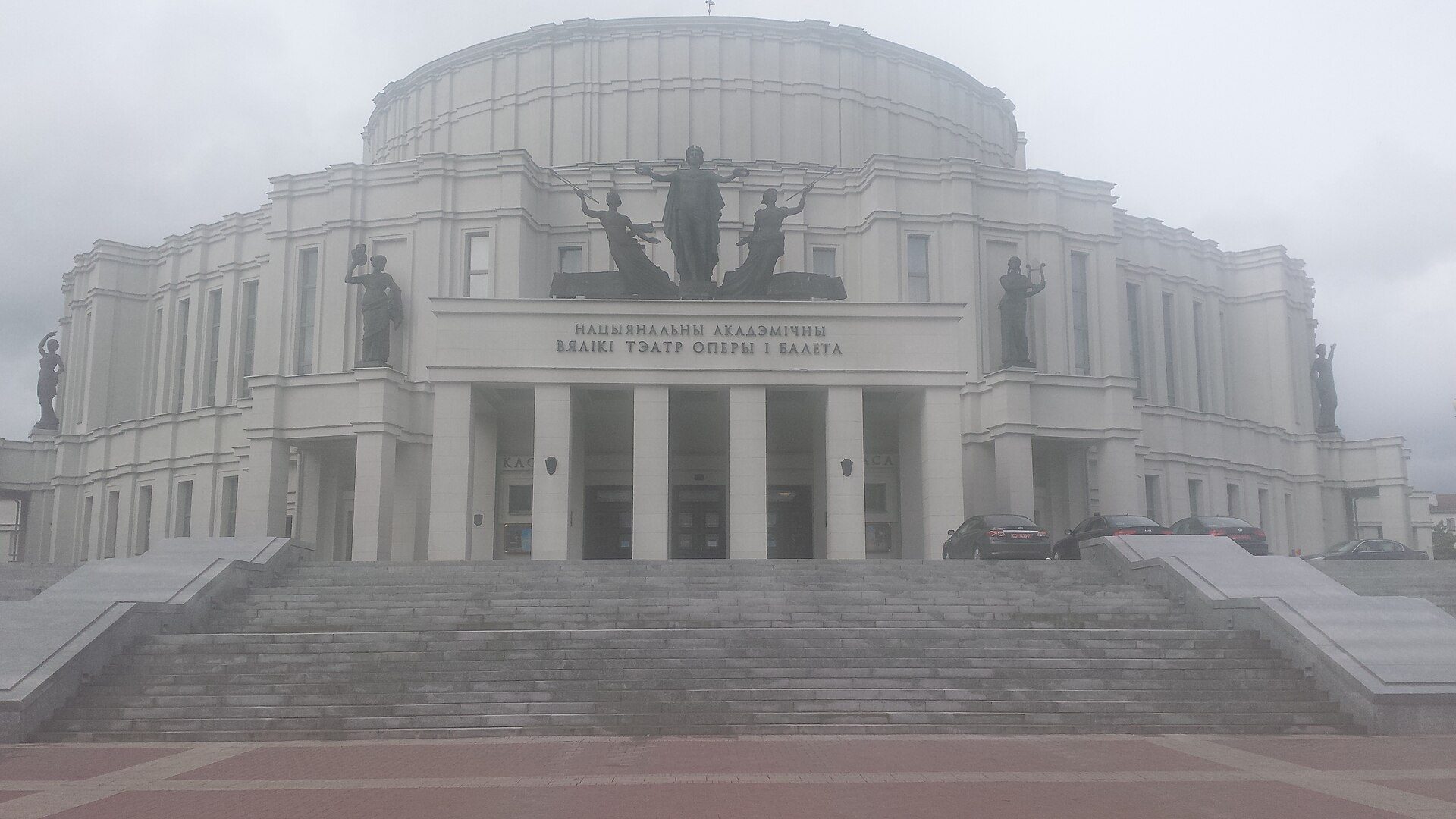
Belarus has a strong classical ballet tradition centred on the Bolshoi Theatre in Minsk. Its first national ballet, Salavei (The Nightingale, 1939), wove Lyavonikha and Kryzhachok into a classical score, and Valentin Elizariev's productions brought the company international fame from the 1970s.
Professional dance training in Belarus began in 1928 with a choreography class at the Minsk music college. In 1933 the State Theatre of Opera and Ballet was founded in Minsk from the Belarusian opera and ballet studio, and in 1938 it moved into the monumental building designed by the architect Iosif Langbard. Its first great national work was Salavei (The Nightingale), composed by Mikhail Kroshner after a story by Zmitrok Byadulya and staged in 1939 by Aleksei Ermolaev; its folk scenes were set by Kanstantsin Aleksyutovich and ended with a grand Lyavonikha. The war forced the company into evacuation, and it reopened in Minsk in December 1944. A choreographic school was established in 1945, and in 1949 the ballet Knyaz-vozera (The Prince of the Lake) by Vasily Zolotarev again drew on Belarusian legend and folk dance. A new era began in 1973 when the young Valentin Elizariev became chief choreographer: his Carmen Suite (1974), The Creation of the World (1976) and Spartacus (1980) made the Minsk ballet famous, and in 1996 he received the Benois de la Danse prize. The theatre reopened in 2009 after a major reconstruction, and today the National Academic Bolshoi Opera and Ballet Theatre presents classics such as Swan Lake and The Nutcracker alongside Belarusian works. Its dancers are trained at the Belarusian State Choreographic Gymnasium-College, whose pupils also learn Belarusian folk-stage dance.