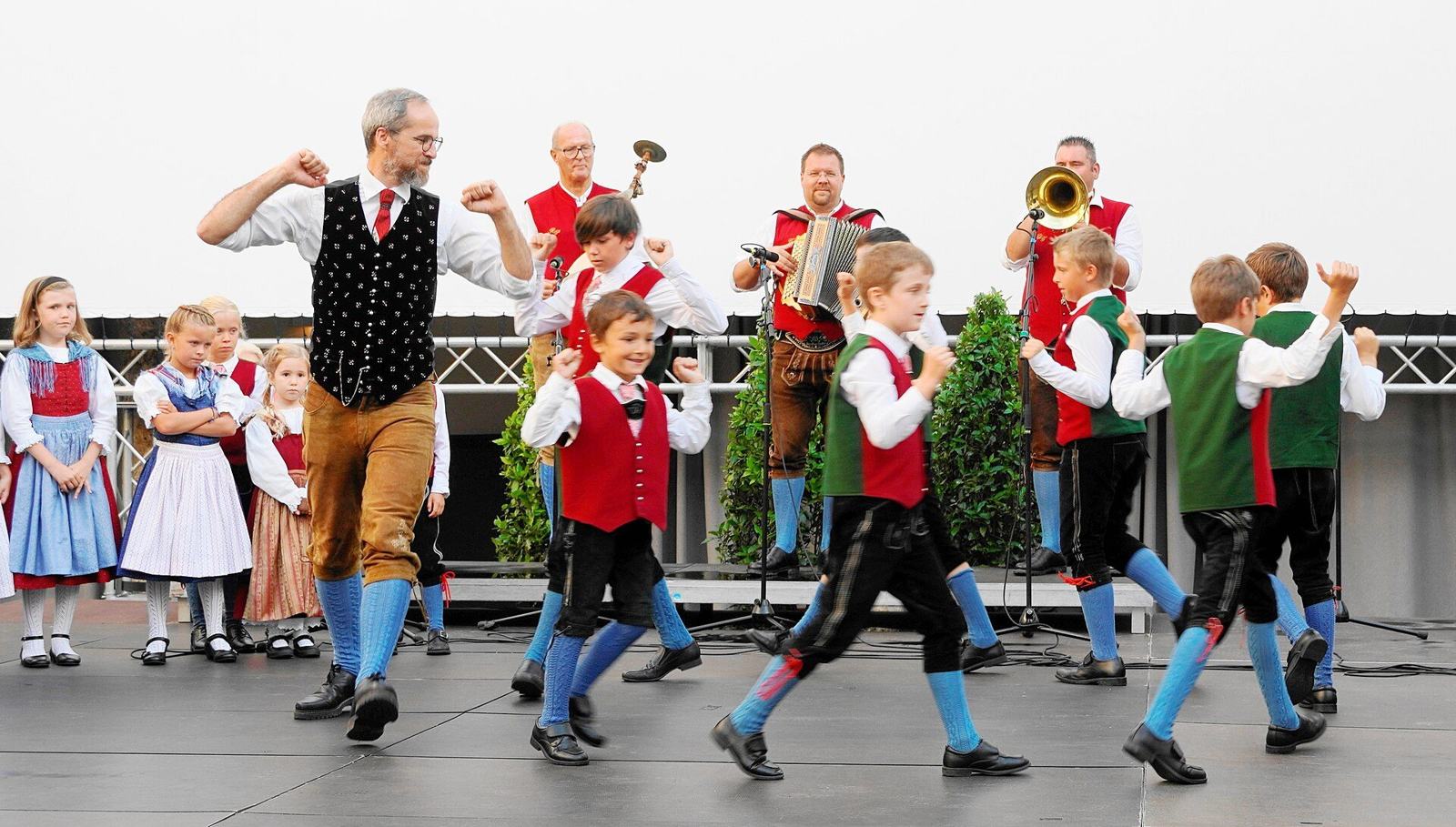
The Zwiefacher ('two-fold') is a turning couple dance whose melody keeps switching between three-quarter and two-quarter bars, so the dancers must switch between waltz steps and quick pivot steps in a pattern they have to learn tune by tune. At home in Bavaria and known in Austria too, it is a favourite challenge of Austrian folk-dance evenings.
The Zwiefacher is one of the most original dances of the Alpine and Danube region. It belongs above all to eastern Bavaria — Lower Bavaria, the Upper Palatinate and the Hallertau — but it was also known in Austria, Bohemia, Alsace and the Black Forest, and today it is a regular part of the Austrian folk-dance repertoire. Its secret is the music: each tune has its own fixed sequence of 'waltz' bars in three-quarter time and 'Dreher' (pivot) bars in two-quarter time — for example three bars of one and two of the other — and the dancers must follow it exactly, turning all the time. The name probably refers to these two kinds of steps. The oldest known Zwiefacher melody is in a music manuscript of about 1730 now in the Amberg city archive; the name itself appears in a court record of 1780, and the Bavarian scholar Johann Andreas Schmeller described the dance in 1837. In 1956 the ethnomusicologist Felix Hoerburger published a famous study of how musicians varied the melodies. Regional names vary — Schweinauer, Grad und Ungrad ('even and odd'), Eintreten, Bairischer — and many tunes carry funny titles that are sung with comic verses. In 2016 the German UNESCO commission added the Zwiefacher to Germany's national intangible-heritage list. In Austria, folk-dance groups learn Zwiefache at dance weeks and open dance evenings — dancers usually announce the pattern before the music starts.