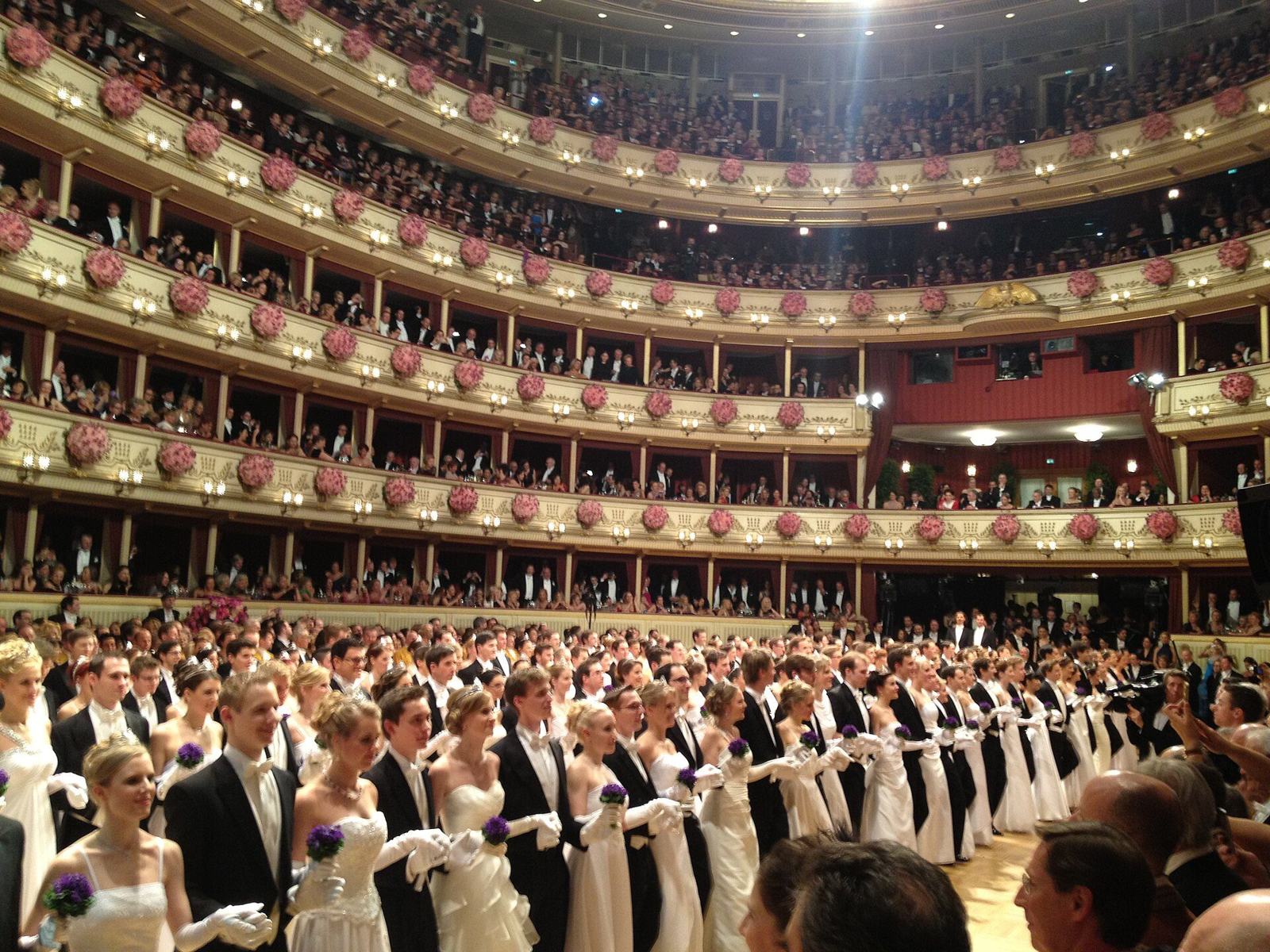
The Viennese waltz is the fast, whirling ballroom dance that grew out of Alpine folk dances and conquered Vienna's ballrooms in the 19th century. Danced to the music of Lanner and the Strauss family, it opens hundreds of balls every winter, and in 2017 it was added to Austria's national inventory of intangible cultural heritage.
The waltz was born in the countryside. Its ancestors were the turning couple dances of the Alps and the Danube lands — the Ländler and the 'Deutscher' — in which partners held each other closely and spun round and round. In late 18th-century Vienna these 'German dances' moved into the city's dance halls, and the closed hold, which shocked moralists, became the dance's great attraction. Huge public ballrooms such as the Sperl and the Apollosaal opened in the first years of the 19th century, and during the Congress of Vienna in 1814–15, when Europe's rulers met to redraw the map after Napoleon, the city danced so much that people said 'the Congress dances'. Two young musicians then turned the waltz into an art: Joseph Lanner and Johann Strauss the Elder, who wrote waltzes as chains of melodies with a slow introduction and a coda. Strauss's son, Johann Strauss II, the 'Waltz King', took it around the world; his Blue Danube of 1867 became Austria's unofficial anthem. The Viennese way of dancing is fast — about 60 bars a minute — with continuous turns to the right and to the left (the Linkswalzer), the couple travelling around the floor anticlockwise. The Viennese waltz is also one of the five standard dances of international ballroom competitions. Every winter Vienna holds more than 450 balls, each opened by debutante couples and the call 'Alles Walzer!', and in 2017 the waltz — played, danced and sung — joined Austria's national inventory of intangible cultural heritage.