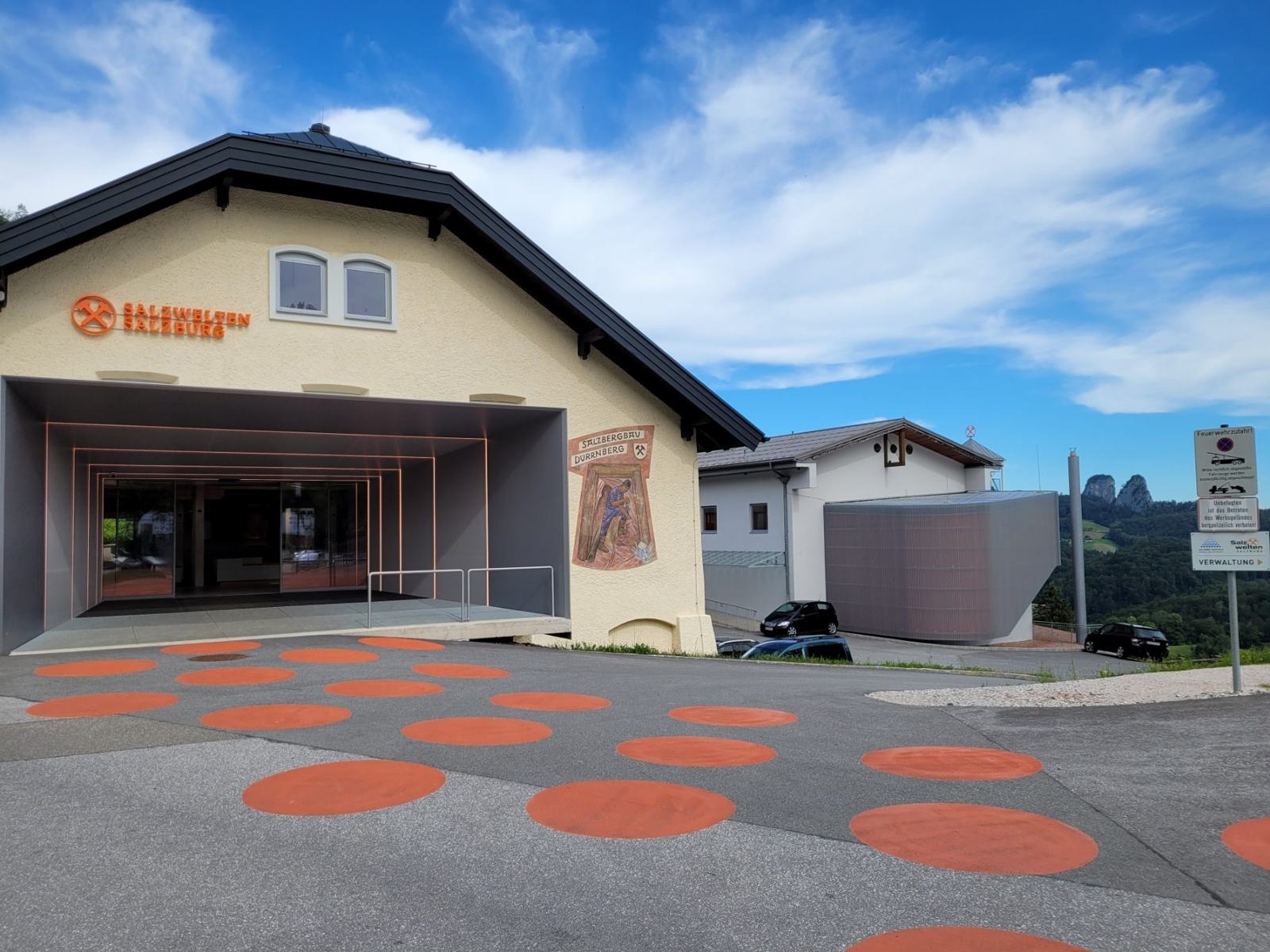
High above Hallein, where salt has been mined since Celtic times, the miners of the Dürrnberg have danced their sword dance since at least 1586. Linked into a chain by their swords and dressed in miners' costume with the tools of their trade, they weave figures that honour their craft. It joined Austria's national intangible-heritage inventory in 2011.
Salt made Salzburg rich, and the Dürrnberg above Hallein is one of the oldest salt mines in Europe — the Celts were already digging there more than 2,500 years ago. The miners (Bergknappen) and salt-works men formed proud guilds with their own uniforms, music and ceremonies, and one of these ceremonies was the sword dance. The first written record of the Dürrnberg sword dance dates from 1586, which means it was already established by then. Like the guild and trade dances of the late Middle Ages, it is a round and chain dance in which the sword is not a weapon but a link: each dancer holds his own sword and the tip of his neighbour's, so that the whole group is joined in one chain. Without ever letting go, the men wind through spirals, arches and serpentines, pass under and over the blades and finally weave the swords into a closed figure that is raised high — a picture of the solidarity on which life underground depended. The dancers wear the traditional miners' costume with the insignia and tools of their trade, and the miners' band of Bad Dürrnberg, which traces its history back to 1586 too, provides the music. In the past the sword dance was performed at miners' festivals and on days of honour in Salzburg, Hallein, Dürrnberg, Berchtesgaden and Bad Reichenhall; today it is danced only on special occasions, and only at the Dürrnberg, by the Verein der Dürrnberger Bergknappen, who have kept its procession, sequence and many figures for almost 450 years. In 2011 it was inscribed in Austria's national inventory of intangible cultural heritage.