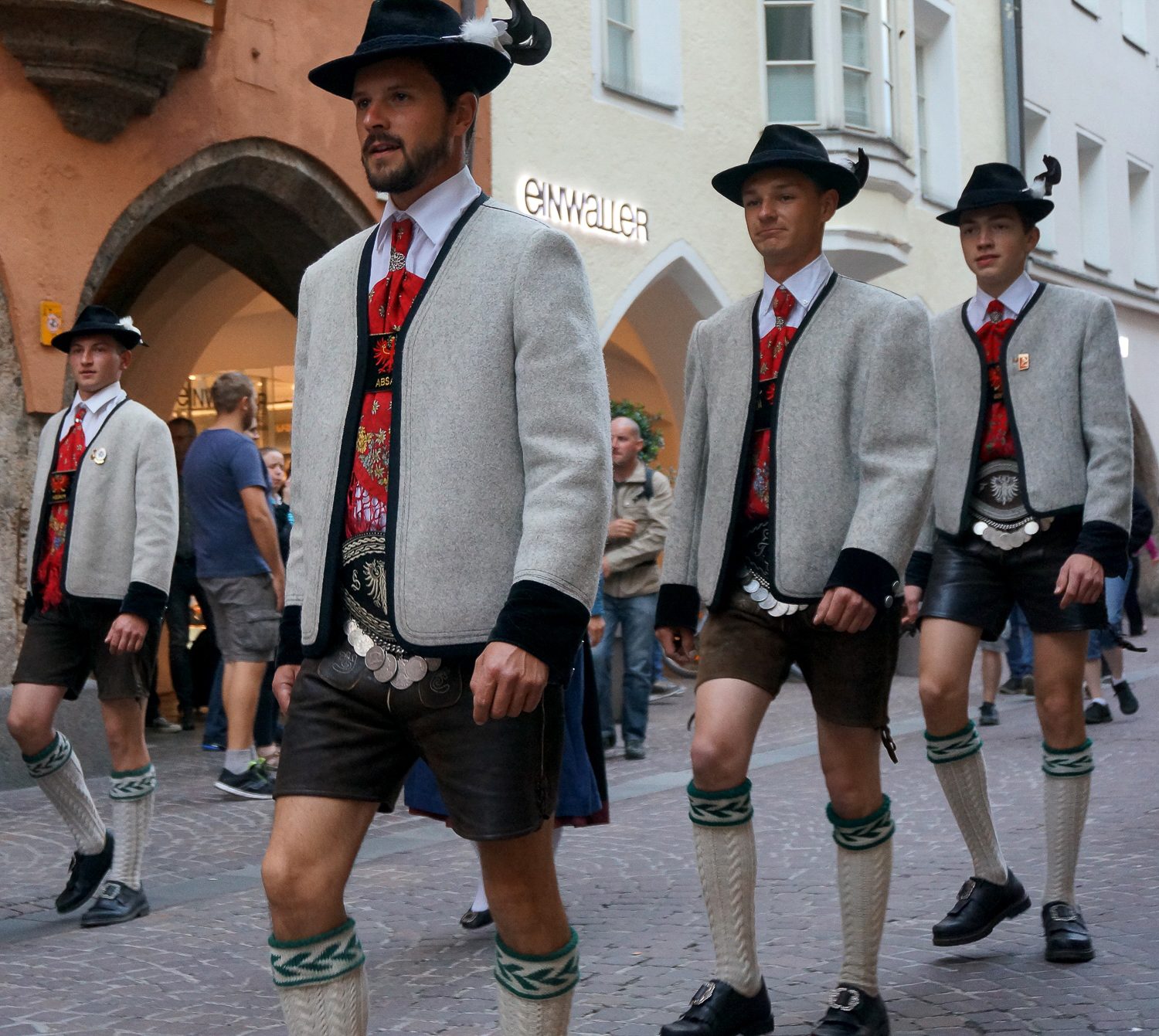
In the Schuhplattler the men leap, stamp and slap their thighs, knees and shoe soles in fast, precise rhythms, while their partners spin in their dirndls. Born from the Ländler in the Alps of Tyrol, Salzburg and Upper Bavaria, it is today the signature dance of Austria's costume clubs.
The Schuhplattler grew out of the Ländler in the high valleys of the Eastern Alps — the folk-dance researcher Karl Horak named parts of Tyrol, South Tyrol, Salzburg and Upper Bavaria as its heartland. In the old courtship dance, the couple danced a Ländler; then the woman continued to turn on her own while the young man showed off around her, 'platteln' — slapping his thighs, knees and shoe soles — clapping, stamping and leaping to win her attention. A popular legend says the men were imitating the display of the mating capercaillie. In the 1820s and 1830s travelling singer families from the Zillertal, such as the Rainers, took 'Tyrolean evenings' to the courts and stages of Europe, and the Plattler became a show dance. In 1858 King Maximilian II of Bavaria was greeted with it on his Alpine journey, and from 1883 the new Trachtenvereine (costume-preservation clubs) of Upper Bavaria, and soon of Tyrol and Salzburg, standardised the steps and made the Plattler the centre of their programmes. By the end of the century it was popular even in Vienna and Graz. Today there are well over a hundred named Plattler figures, danced in pure men's groups (the Burschenplattler) or with couples; clubs compete in 'Preisplattln' contests, and tourist shows in Innsbruck and the ski resorts add comic numbers such as the woodchopper dance (Holzhacker) and the 'slap dance' (Watschentanz). The music stays in three-quarter time, played on the Steirische Harmonika, zither or a small brass band.