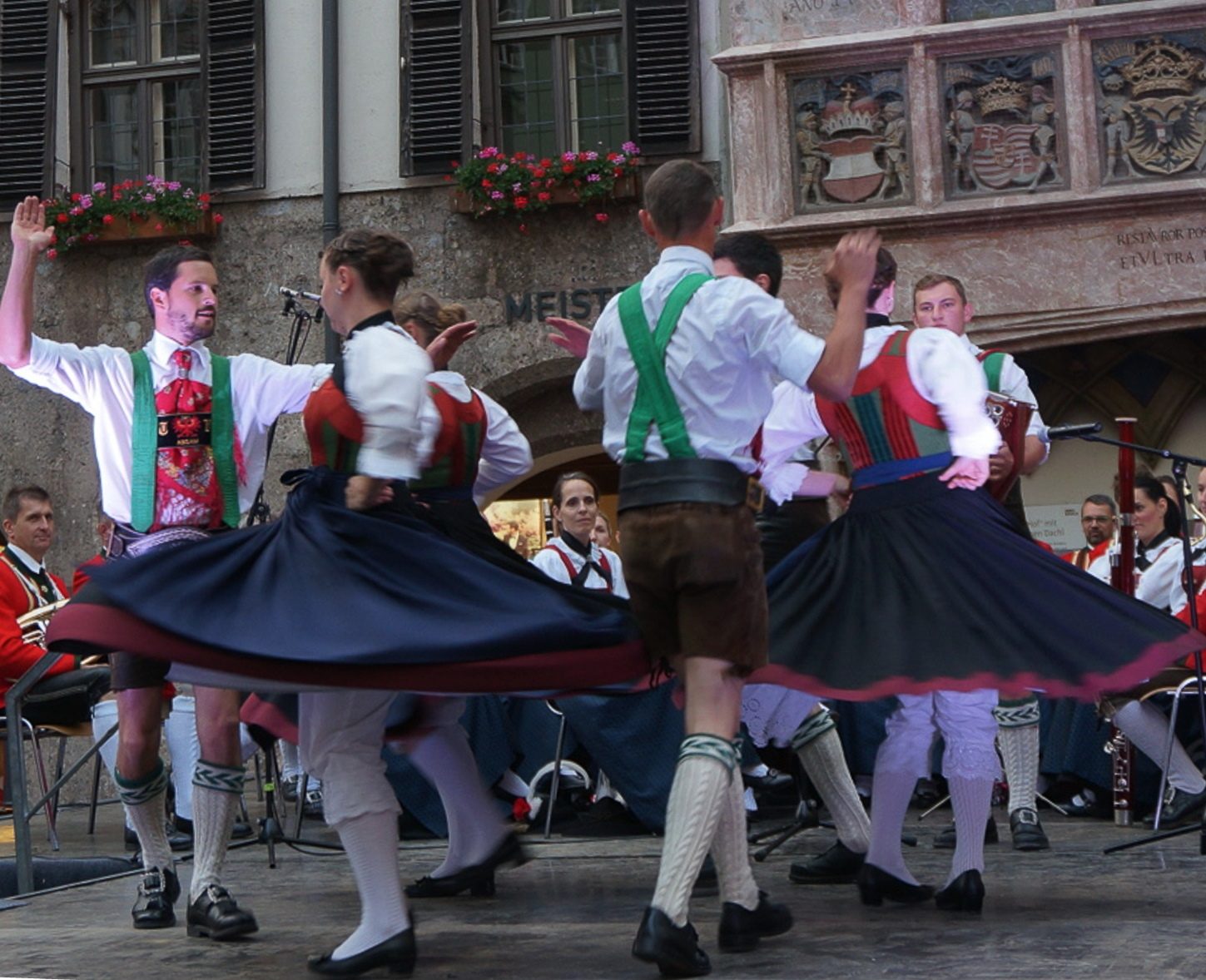
The polka bounced into Vienna from neighbouring Bohemia around 1840 and never left. Johann Strauss II and his brothers wrote more than a hundred polkas for the city's ballrooms, and in the villages the polka — with its brass bands and accordions — is still danced at every Kirtag and wedding.
The polka was born in Bohemia in the 1830s — its name is usually linked to the Czech word for 'half-step', the little hop that starts every bar. It conquered Prague, reached Vienna around 1840 and Paris soon after, where 'polkamania' broke out. Vienna, the capital of a multinational empire with a large Czech population, took the polka to its heart. The Strauss family made it a concert form in several flavours: the fast Schnellpolka, the moderate and elegant Polka française and the Polka-Mazurka in three-quarter time. Johann Strauss II wrote the Annen-Polka (1852), the Tritsch-Tratsch-Polka (1858) and Unter Donner und Blitz (1868); with his brother Josef he composed the Pizzicato-Polka, and his brother Eduard was famous for galloping polkas such as Bahn frei! (1869). These pieces are still the encores of the Vienna Philharmonic's New Year's Concert. In the countryside the polka mixed with local dances: folk-dance groups dance the Kreuzpolka, the Siebenschritt and countless polka mixers, and the Bohemian-style brass band (Blasmusik) that plays at every village festival is built on polka and march rhythms. At Viennese balls the polka is the moment to catch your breath between waltzes — or to lose it completely in a fast Schnellpolka.