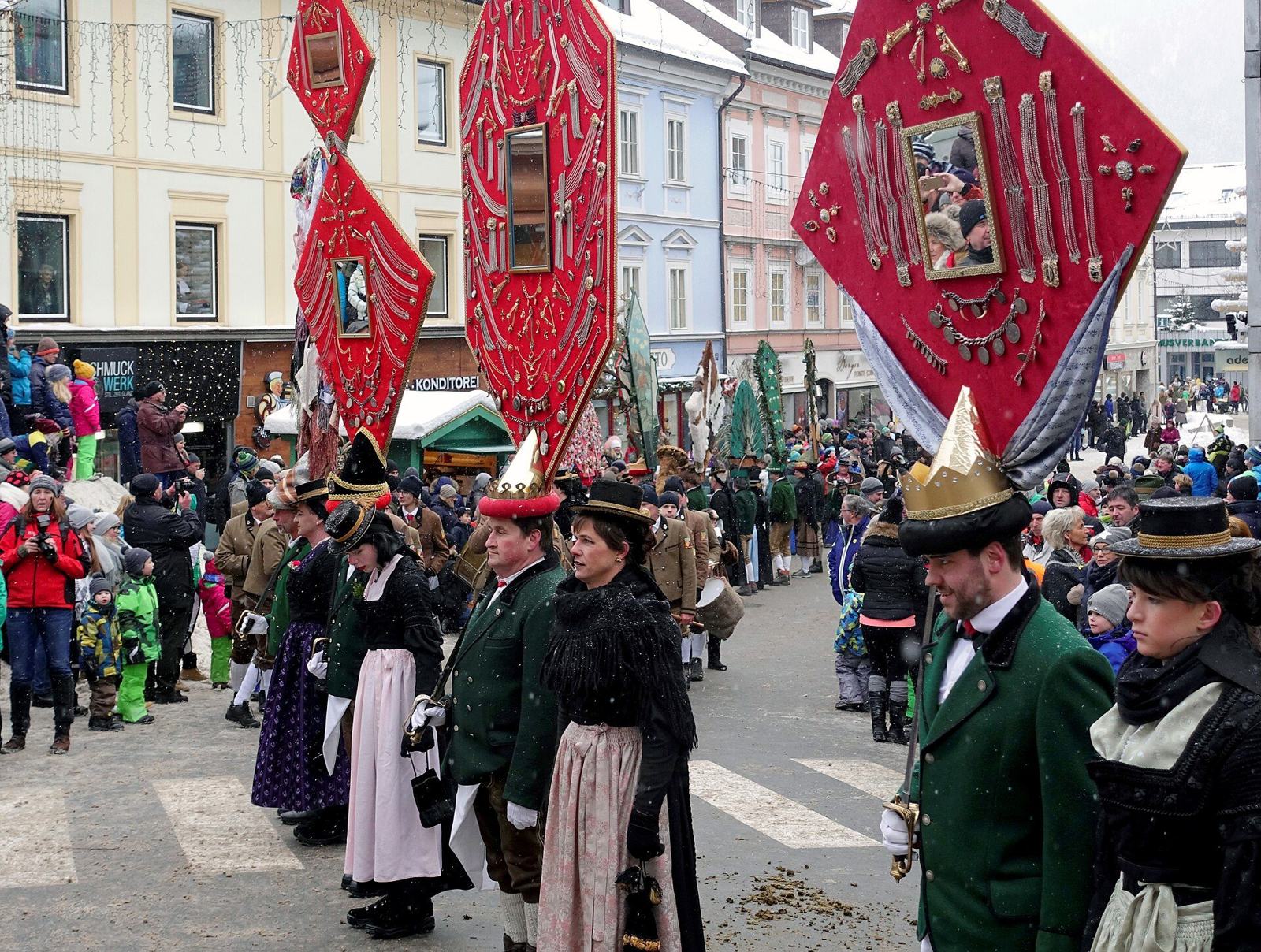
Between Christmas and Epiphany, the 'rough nights' of the Alpine winter, the Perchten come out: 'beautiful' Perchten with tall glittering headdresses who bless houses with a bow and a short dance, and 'ugly' Perchten in furs and horned wooden masks who chase away the dark. In Salzburg's mountains the great Perchten runs — and the stamping Tresterer dances of the Pinzgau — are among the oldest ritual dances of Austria.
The Perchten take their name from Frau Percht or Perchta, a figure of Alpine folk belief who rules the twelve 'rough nights' (Raunächte) of midwinter. The Perchten season runs from about 21 December to 6 January, and two kinds of figures appear. The Schiachperchten ('ugly Perchten') wear shaggy furs, cowbells and carved wooden masks with goat horns; they are said to drive out evil and wake the soil. The Schönperchten ('beautiful Perchten') bring light, sun and fertility. Their most spectacular form are the Kappenperchten of the Gastein valley, who carry headdresses up to 2.5 metres high and weighing up to 50 kilograms, decorated with mirrors, embroidery and jewellery. At the command of the 'Perchten captain' they stop before the spectators and houses, perform a short dance and a deep bow, and wish everyone luck for the new year. The Gastein Perchten run, with about 140–165 figures — Perchten, the Three Kings, jesters (Hanswurst), witches, devils, a bear with its keeper, the goat-like Habergeiß and a barrel organ — goes back to the Renaissance; secular and church authorities banned it several times, but it has been held regularly since about 1900 and only every four years. It was added to Austria's national intangible-heritage inventory in 2011. Each year on 6 January the Pongau Perchten run rotates between Altenmarkt, Bischofshofen, St. Johann and Gastein. In the Pinzgau, the Tresterer — Schönperchten in red-and-gold brocade with crowns of white rooster feathers — perform a slow, heavy stamping dance in a circle, said to tread fertility into the ground. Perchten should not be confused with the Krampus, St Nicholas's devilish companion, who roams in early December.