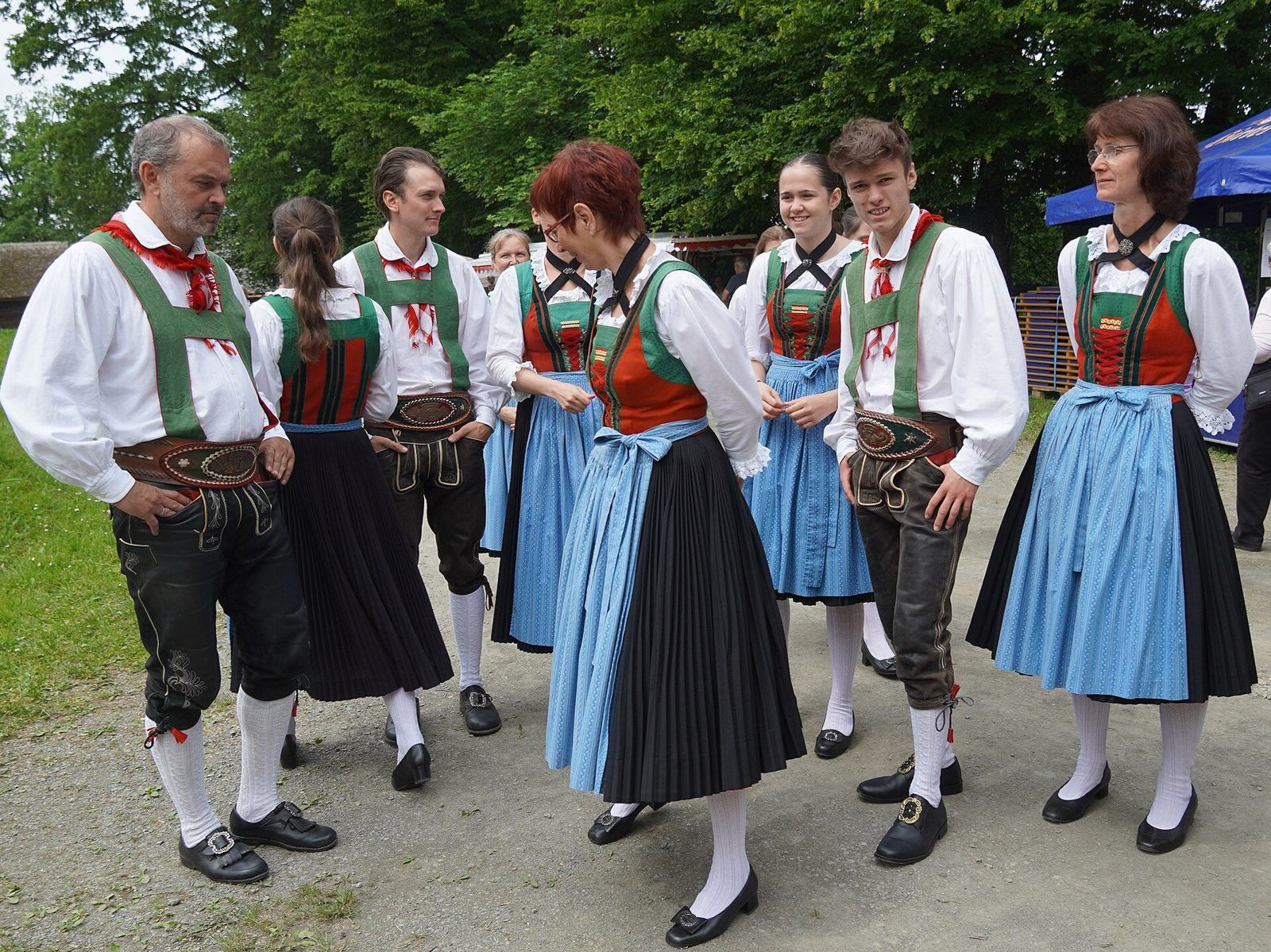
The Ländler is Austria's classic country dance in three-quarter time: couples turn under raised arms, weave their hands into figures and spin together, often between bursts of singing, clapping and stamping. It takes its name from the 'Landl', the Upper Austrian countryside, and it is the direct ancestor of the waltz.
Long before the waltz reached the ballrooms, Austrian villagers were dancing in three-quarter time. The Ländler — 'the dance from the Landl', the farming country of Upper Austria — was a moderate turning dance for couples, danced on inn floors and at weddings and church fairs. Its typical moves are the 'Figuren': the man turns the woman under his arm, the partners pass hands over and around their heads, interlace their arms into 'windows' and finally take hold and turn together. In many valleys the dance is interrupted by the men, who sing short improvised verses (Gstanzl), yodel, clap and stamp, before the couples spin again. Every region has its own form: the Steirischer in Styria and the Salzkammergut, the Landler of the Innviertel, the Schleuniger and many more. Vienna's composers listened carefully: Mozart and Beethoven wrote 'German dances' and Ländler, and Franz Schubert composed hundreds of short Ländler for piano for dancing evenings with his friends. As the dance sped up and moved to the cities, it became the waltz — but the Ländler never disappeared. Around 1900, folk-dance collectors such as Raimund Zoder began writing down the regional forms, and the Austrian folk-dance movement (on the national intangible-heritage inventory since 2010) still teaches them. The Innviertel Landler, created and handed down since about 1850 by the young men's fellowships (Zechen) of the villages, was added to the inventory in 2013. Millions of people know a Ländler without realising it: Maria and Captain von Trapp dance one in The Sound of Music (1965).