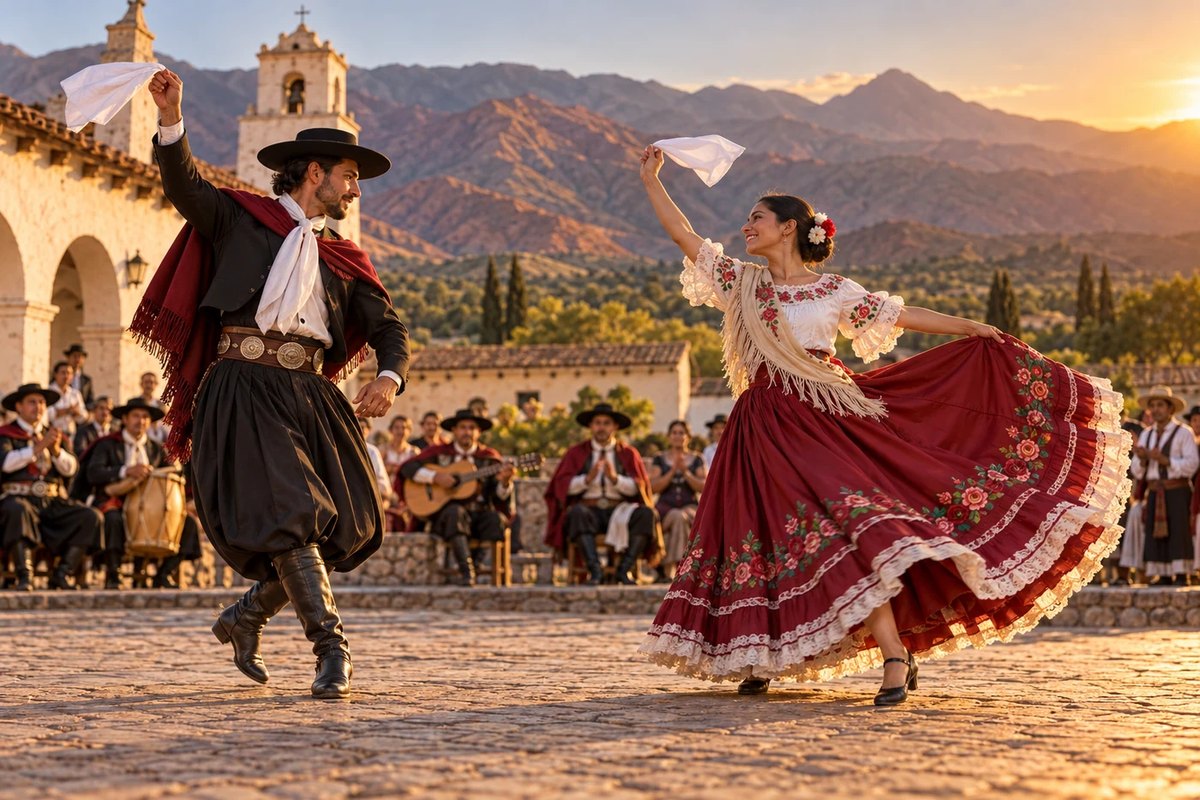
The zamba is Argentina’s most romantic folk dance. Holding white handkerchiefs, partners circle each other slowly, never touching, in a delicate game of pursuit and acceptance that ends with the ‘coronación’, when the man ‘crowns’ his partner with his handkerchief. Its unhurried 6/8 songs, such as ‘Zamba de mi esperanza’, are some of the best-loved in the country.
The zamba descends from the Peruvian zamacueca, which arrived in Argentina in the early 19th century and evolved into a slower, more lyrical dance in the north-west — especially Salta, Tucumán and Catamarca. Unlike the playful chacarera, the zamba is about longing and respect: the handkerchief does the talking. Poets and composers such as Manuel J. Castilla and Gustavo ‘Cuchi’ Leguizamón in Salta, Atahualpa Yupanqui and the group Los Chalchaleros made the zamba a national poetry. ‘La López Pereyra’, ‘Zamba de Vargas’ and ‘Zamba para no morir’ are classics. The zamba is a central part of school folk-dance education across Argentina.