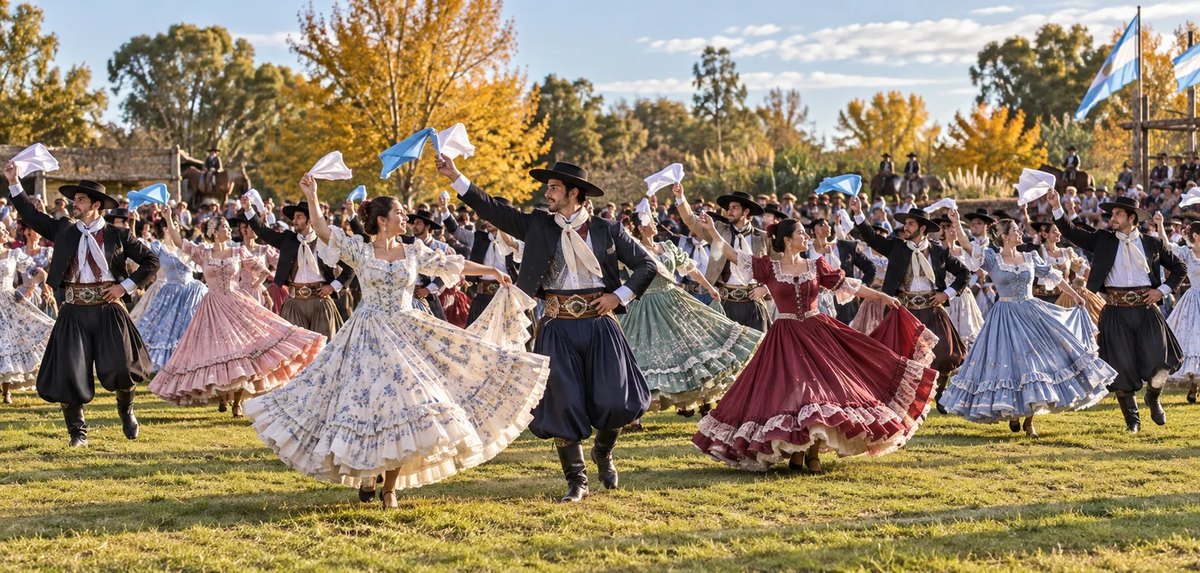
The pericón is a large set dance for many couples, led by a ‘bastonero’ who calls the figures. Dancers form lines, circles, stars and arches, and in its most famous figure they raise light-blue and white handkerchiefs to form the Argentine flag. By Law 26.297 of 2007, the pericón is Argentina’s national dance.
The pericón descends from the European contradanza and was popular in the Río de la Plata region in the 19th century, both in Argentina and Uruguay, where it is also considered a national dance. Its figures were codified at the end of the 1800s, and in the 1880s the Podestá brothers’ circus drama ‘Juan Moreira’ helped make it famous on stage. Today the pericón is danced at patriotic holidays — 25 May, 9 July — and at the Día de la Tradición (10 November), especially in schools, where dozens of couples in gaucho clothing and paisana dresses form the flag. Its stately music, often played by guitars and accordion, makes it a festive symbol of national unity.