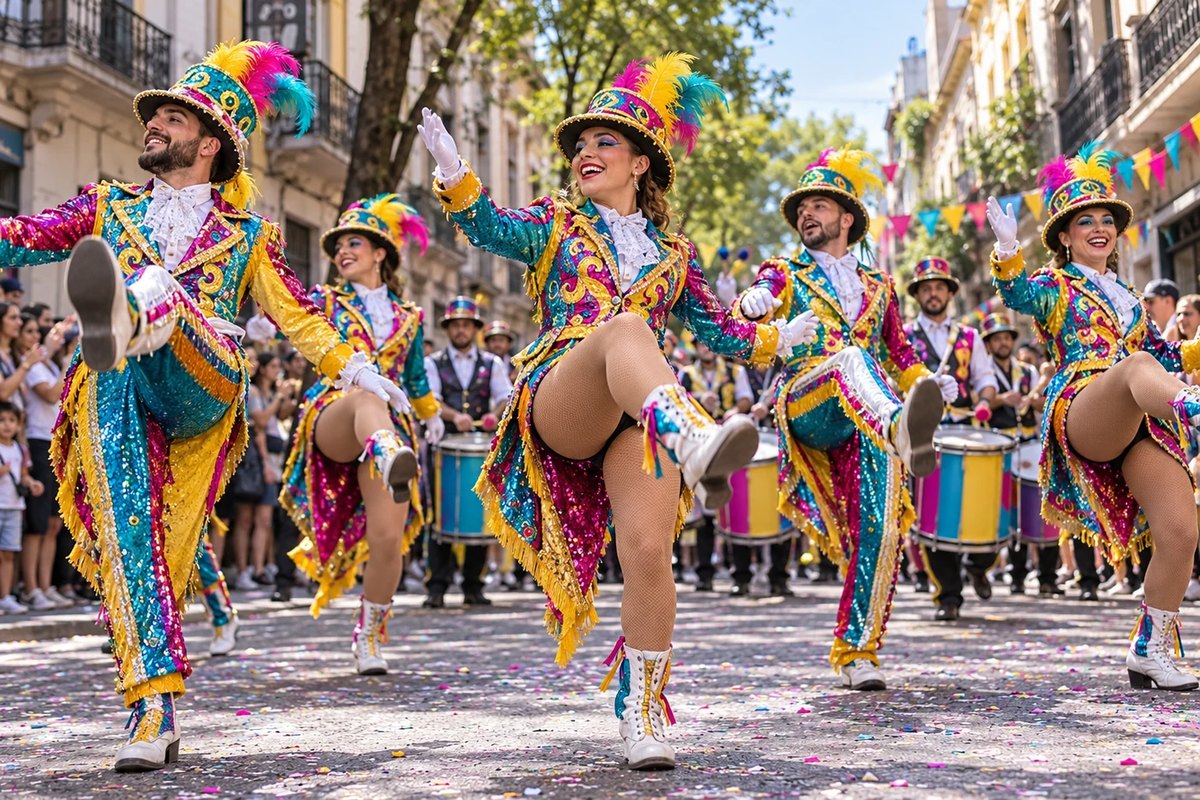
The murga porteña is the carnival street art of Buenos Aires’ neighbourhoods. Groups of dozens of murgueros in shiny sequinned tailcoats (levitas) and top hats parade and dance to the bombo con platillo — a bass drum topped with a cymbal — with jumps, high kicks, arm throws and ‘matanzas’ of frantic footwork, while singers perform satirical songs.
Carnival in Buenos Aires grew in the 19th century from Afro-Argentine candombe processions, European masked balls and immigrant celebrations. The neighbourhood murgas, formed in the early 20th century, became the voice of each barrio, mixing the dance of Afro-Argentine comparsas with satire, songs of protest and pride. During the military dictatorship (1976–1983) the carnival holidays were abolished, but murgas survived in the neighbourhoods. In 1997 the City of Buenos Aires recognized the murga as cultural heritage, and the national carnival holidays were restored in 2011. Every February weekend, ‘corsos’ fill the streets of La Boca, Boedo, Saavedra and many other barrios.