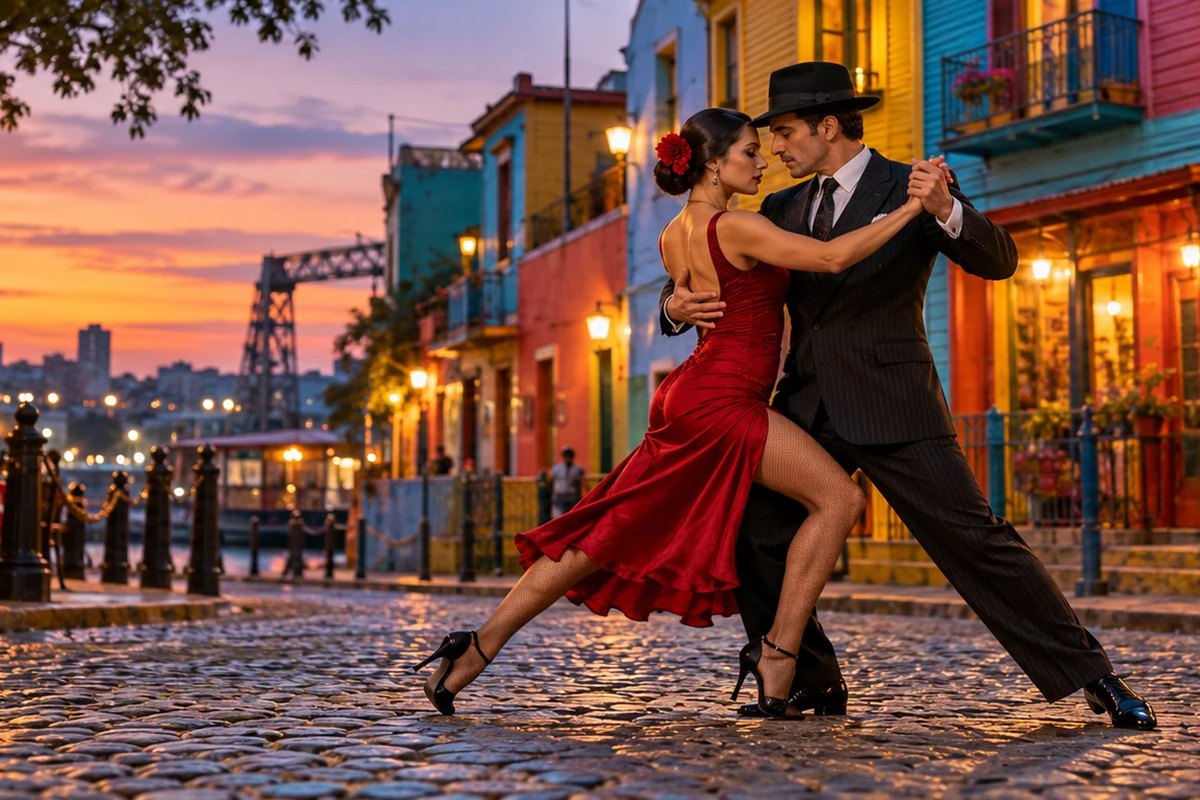
At every milonga (the tango dance event) the DJ alternates tandas of tango with tandas of vals and milonga. The milonga is a fast, cheerful 2/4 dance with simple, rhythmic steps and quick ‘traspié’ double-time; the vals criollo is a smooth 3/4 Argentine waltz in which couples turn continuously around the floor.
The milonga began in the countryside as a song form of the payadores — improvising gaucho singers — and in the city it became a lively dance that fed directly into early tango. In the 1930s orchestras such as Francisco Canaro’s revived the ‘milonga ciudadana’, and dancers developed ‘milonga lisa’ (smooth) and ‘milonga con traspié’ (with quick syncopations). The vals criollo descends from the European waltz brought by immigrants, played with tango instrumentation and Argentine phrasing. Classics such as ‘Desde el alma’ (Rosita Melo) are beloved at milongas. Together, tango, vals and milonga make up the three rhythms every social tango dancer learns.