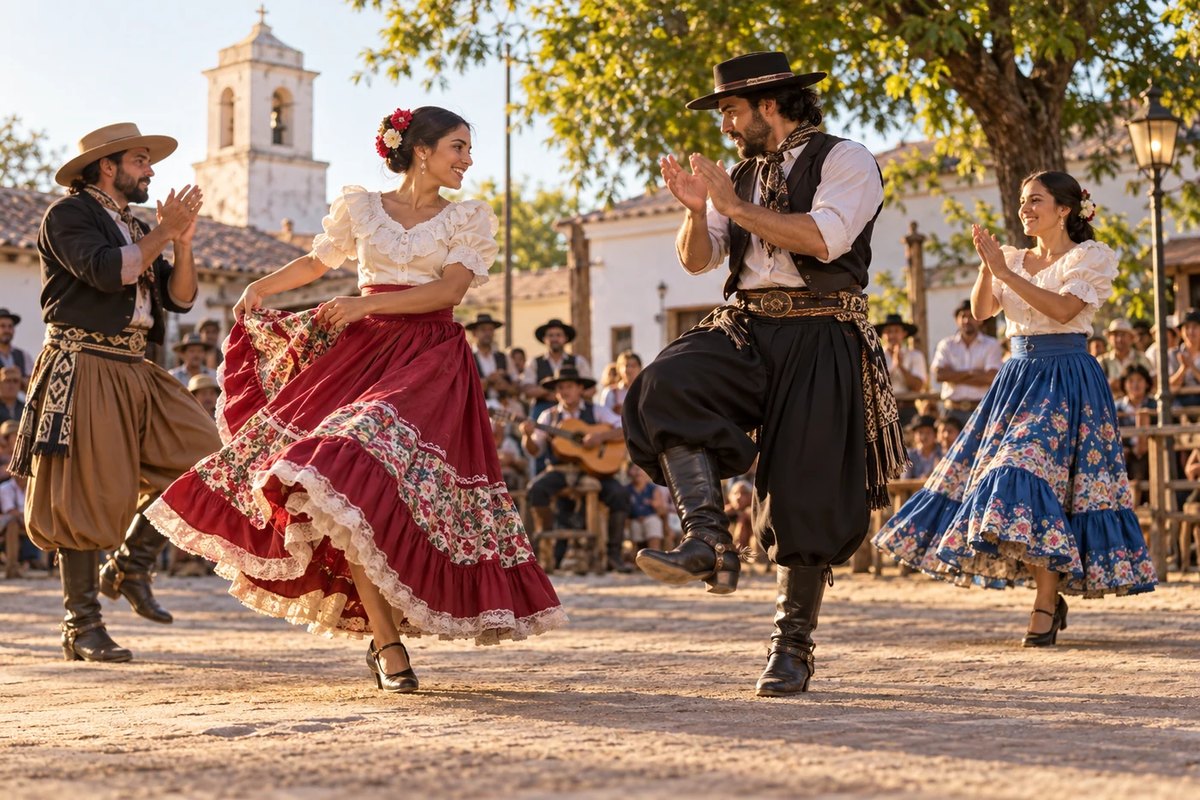
In the escondido (‘hidden’), partners take turns crouching down as if to hide while the other searches for them with a lively zapateo or zarandeo, until they are ‘found’ and the dance continues. With its quick 6/8 rhythm and playful story, it is a favourite of children’s folk groups and peñas.
The escondido belongs to the family of 19th-century criollo dances with gato and chacarera. It was popular in the Cuyo region and the centre and north of Argentina, and its game of hiding and seeking reflects the humour of rural courtship. Folk-dance collectors such as Carlos Vega documented the escondido in the 20th century, preserving its choreography for schools and ballet folklórico companies. It remains part of the standard repertoire of Argentine folk dance and appears at festivals across the country.