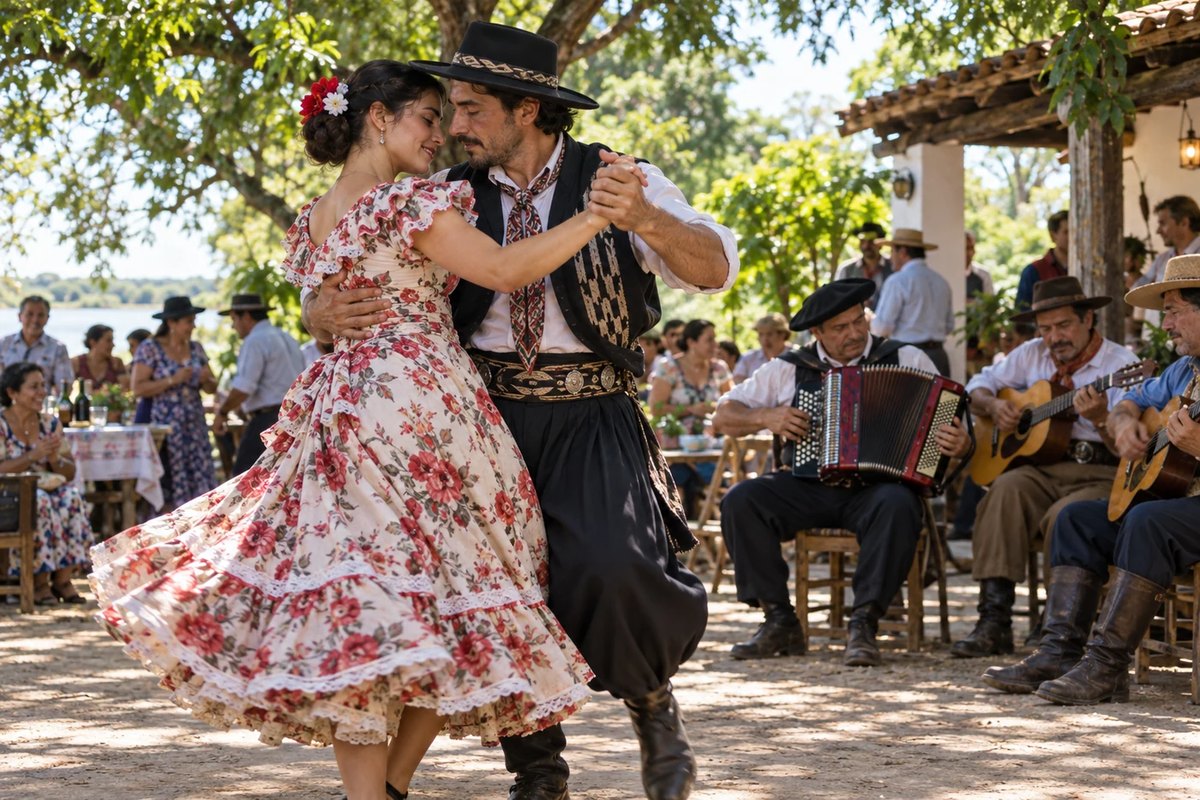
Chamamé is the music and dance of north-eastern Argentina — Corrientes, Misiones, Chaco, Entre Ríos and Formosa. Couples dance in a close embrace with small, swaying walking steps, while accordions, guitars and bandoneóns play and someone lets out a ‘sapucay’ — a long, joyful cry. UNESCO inscribed chamamé in 2020.
Chamamé grew from the meeting of Guaraní culture, the music of the Jesuit missions, and the polkas and accordions brought by European immigrants — German, Polish, Ukrainian and others — in the late 19th and early 20th centuries. Its texts often mix Spanish and Guaraní and speak of rivers, work and love. Artists such as Mario del Tránsito Cocomarola, Ernesto Montiel, Isaco Abitbol, Ramona Galarza, Tarragó Ros, Raúl Barboza and Chango Spasiuk carried chamamé from rural dances to national stages and international festivals. Every January Corrientes hosts the Fiesta Nacional del Chamamé, ten nights of music and dancing in an amphitheatre named after Cocomarola.