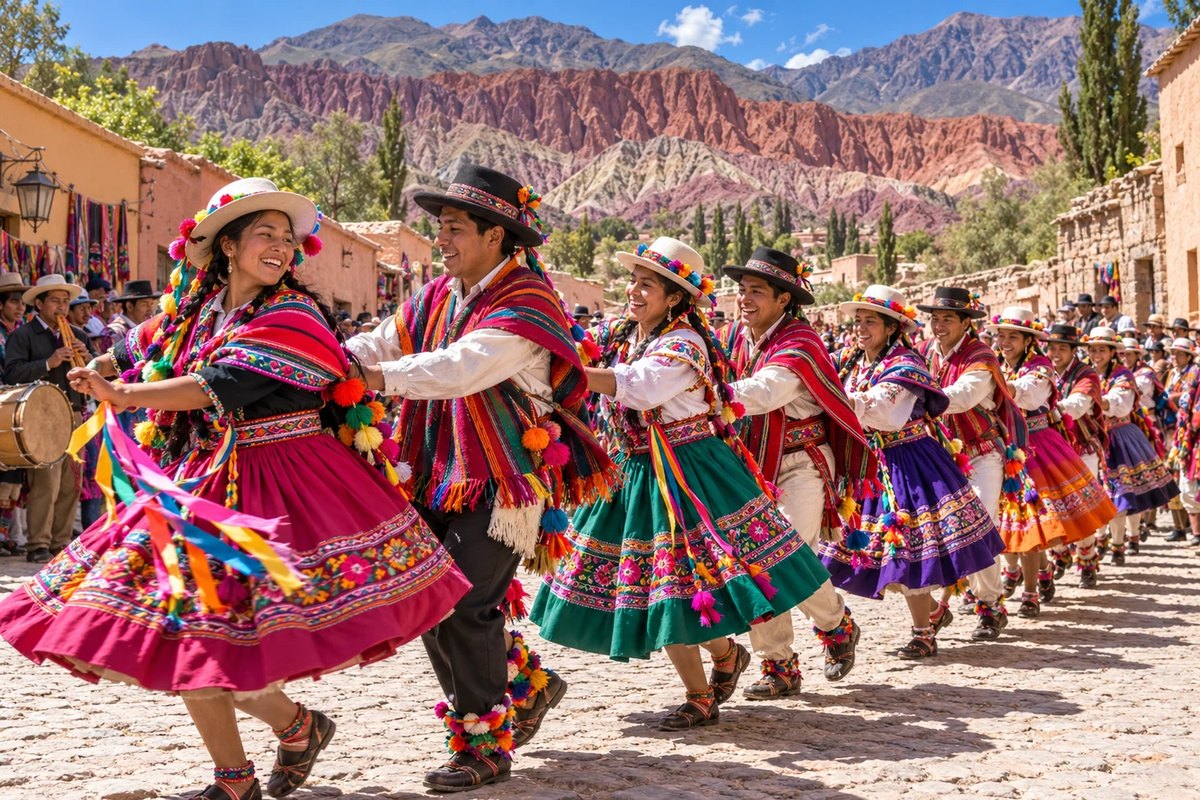
The carnavalito is a lively group dance of north-western Argentina, related to the Andean huayno. Dancers hold hands or handkerchiefs and follow a leader in lines, circles, spirals and bridges, with small hopping steps to quena, charango, sikus and bombo. It fills the streets of Jujuy and Salta during carnival.
The carnavalito comes from the Andean world shared by Argentina, Bolivia and Peru, and is especially associated with the Quebrada de Humahuaca, a UNESCO World Heritage valley in Jujuy. Its roots lie in Indigenous community dances, later blended with the Catholic carnival calendar. The 1941 song ‘El humahuaqueño’ by Edmundo Zaldívar made the carnavalito famous throughout Argentina and the world. In Jujuy, carnival begins with the ‘desentierro’ (unearthing) of the Pujllay, the spirit of carnival, and ends with its burial; comparsas dance carnavalitos and other dances through towns like Humahuaca, Tilcara and Uquía. Related northern dances include the bailecito and the huayno.