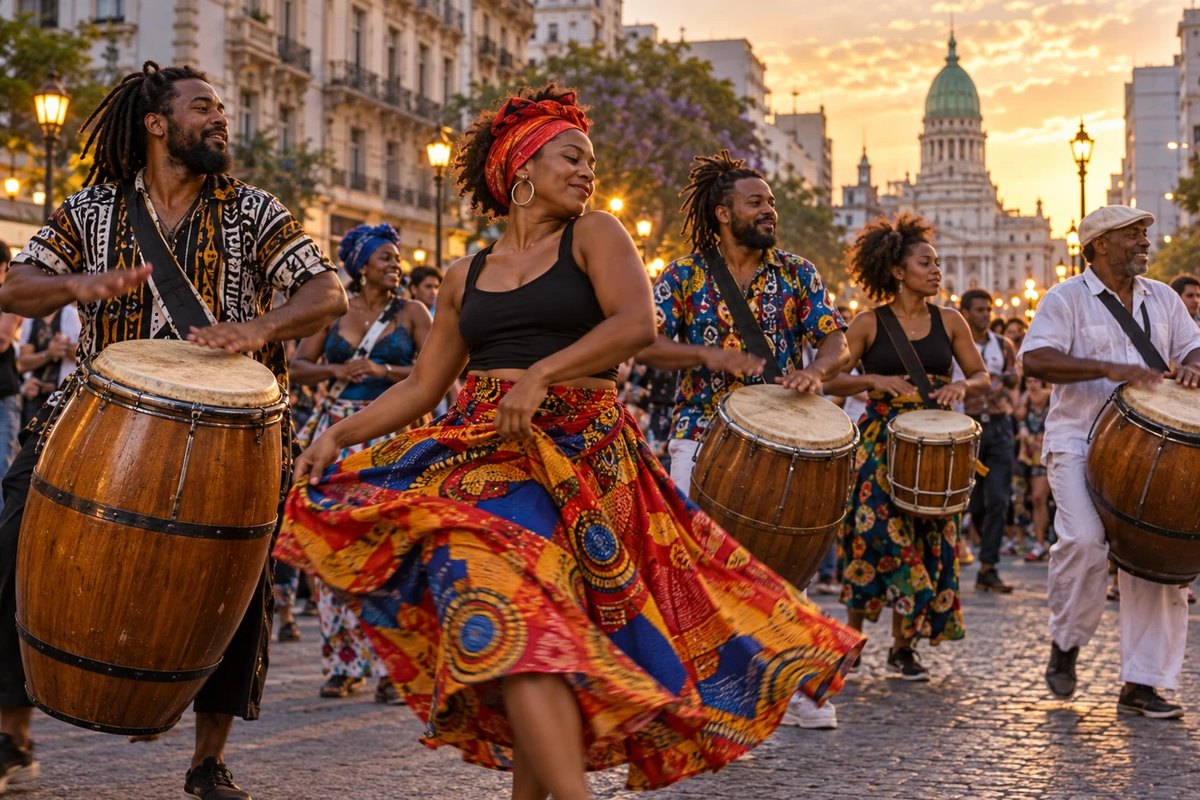
Candombe is the drum music and dance of Afro-Argentines and Afro-Uruguayans in the Río de la Plata. In Buenos Aires, Afro-Argentine collectives keep candombe porteño alive with drums, songs and processions, and dancers move with rolling hips, swinging arms and characters such as the ‘escobero’ and the ‘mama vieja’. Candombe is one of the roots of tango and the murga.
In colonial times, enslaved Africans made up a large part of the population of Buenos Aires — perhaps a third by 1810. They organized themselves into ‘naciones’ (societies based on African origins) that held candombe dances on Sundays and holidays, especially in the San Telmo and Montserrat neighbourhoods. In the late 19th century, official narratives claimed that Afro-Argentines had ‘disappeared’, but their families, music and influence continued — in tango, milonga and carnival. Since the 1990s, Afro-Argentine organizations and musicians have revived candombe porteño and demanded recognition. In 2013 Argentina created the National Day of Afro-Argentines and Afro Culture on 8 November, honouring María Remedios del Valle, an Afro-Argentine heroine of the independence wars. Uruguay’s candombe was inscribed by UNESCO in 2009.