··EN · ES · FA
Tap a region to read its story
Swipe the timeline
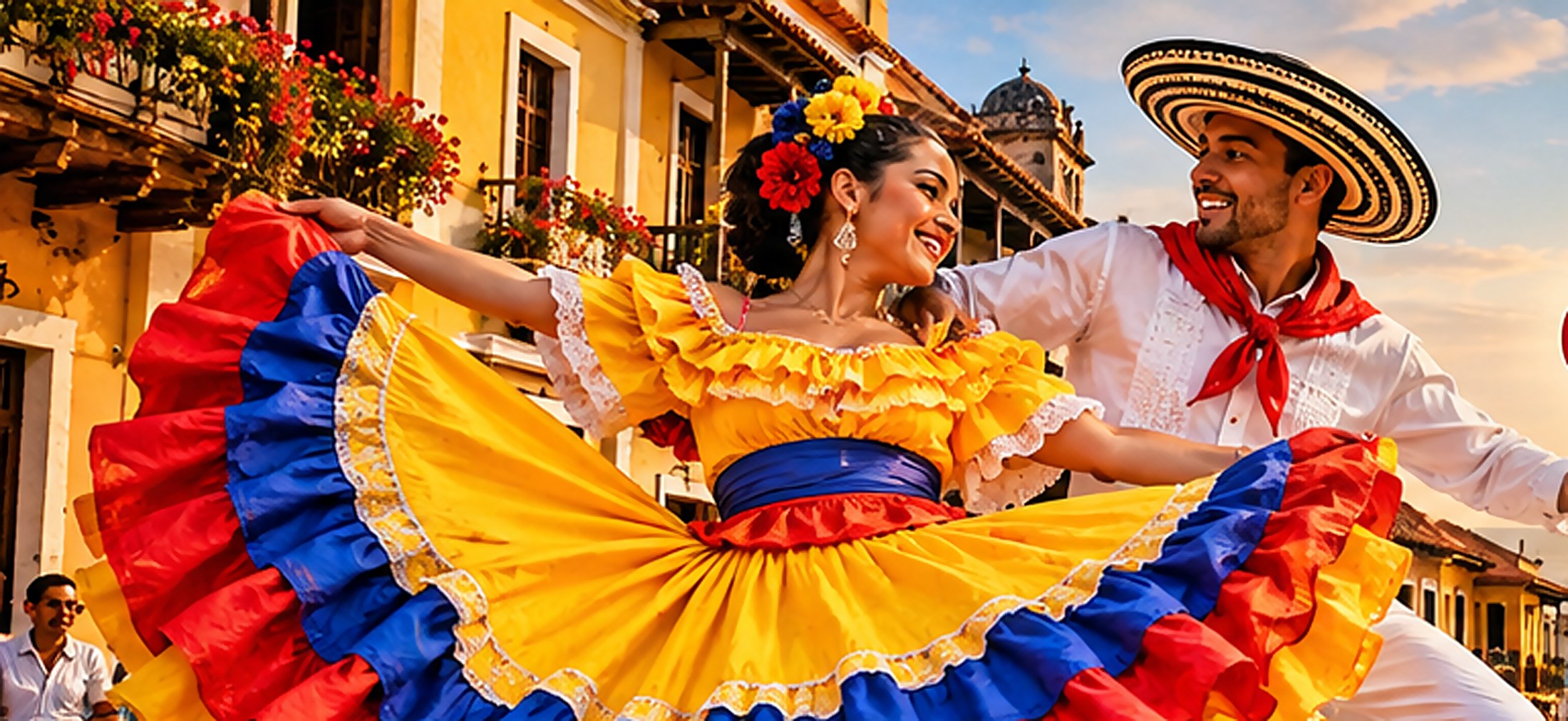
Colombia’s cultural regions are a helpful introduction, not borders: styles overlap, travel and change.
The Caribbean is a world of rivers, coast, drums and street processions. Indigenous gaitas, Afro-descendant drumming, brass bands and neighbourhood sound systems all live side by side.
Barranquilla’s carnival gathers congo, garabato, paloteo and mapalé; San Basilio de Palenque and Cartagena have their own Afro-Colombian histories, from bullerengue to champeta.
Marimba, cununo and bombo drums, call-and-response singing and community gatherings define many Afro-Pacific traditions. The South Pacific marimba heritage is listed by UNESCO.
Chocó, in the north, has its own chirimía bands and abozao dance, and Quibdó’s San Pacho festival (UNESCO 2012) fills the streets with music each year.
Mountain communities keep couple and group dances shaped by local fiestas and by the tiple, guitar and bandola. Huila’s sanjuanero is the heart of the Festival del Bambuco; Boyacá and Santander keep guabina and torbellino.
The big Andean cities — Bogotá, Medellín and Cali — are also centres of dance education, from ballet and contemporary dance to Cali’s famous salsa.
The Llanos are a land of cattle, horses and wide rivers. Joropo — with harp, cuatro and maracas — is their music and dance, shared with Venezuela.
Work songs sung to herds were recognised by UNESCO in 2017 as heritage in need of urgent safeguarding.
In the Amazon, many Indigenous peoples keep ceremonial music and dance linked to the forest, seasons and community life. These are living practices of specific peoples and should be learned with their consent.
On the Caribbean islands of San Andrés and Providencia, the English-speaking Raizal people dance to calypso, mento and polka, a culture different from the mainland.