··EN · ES · FA
Tap a region to read its story
Swipe the timeline
From the brass bands of the desert to the island songs of the Pacific, each of Chile’s regions has its own way of dancing. Tap a region on the map to read its story.
Brass bands, Andean steps and Afro-Arican ensembles are heard in distinctive settings. Explore cachimbo in the Tarapacá oases, cueca nortina and tumbe in Arica.
Cachimbo connects Pica, Mamiña and nearby towns with regional family and patron-saint festivities. Its handkerchief figures differ from cueca.
Coquimbo and Andacollo are important places for Bailes Chinos, musical-dance confraternities recognized by UNESCO. Their processions are lived devotion, not only entertainment.
Rural cueca and urban cueca brava reveal different social worlds. Santiago’s musical neighbourhoods are part of Chilean dance history alongside family fiestas.
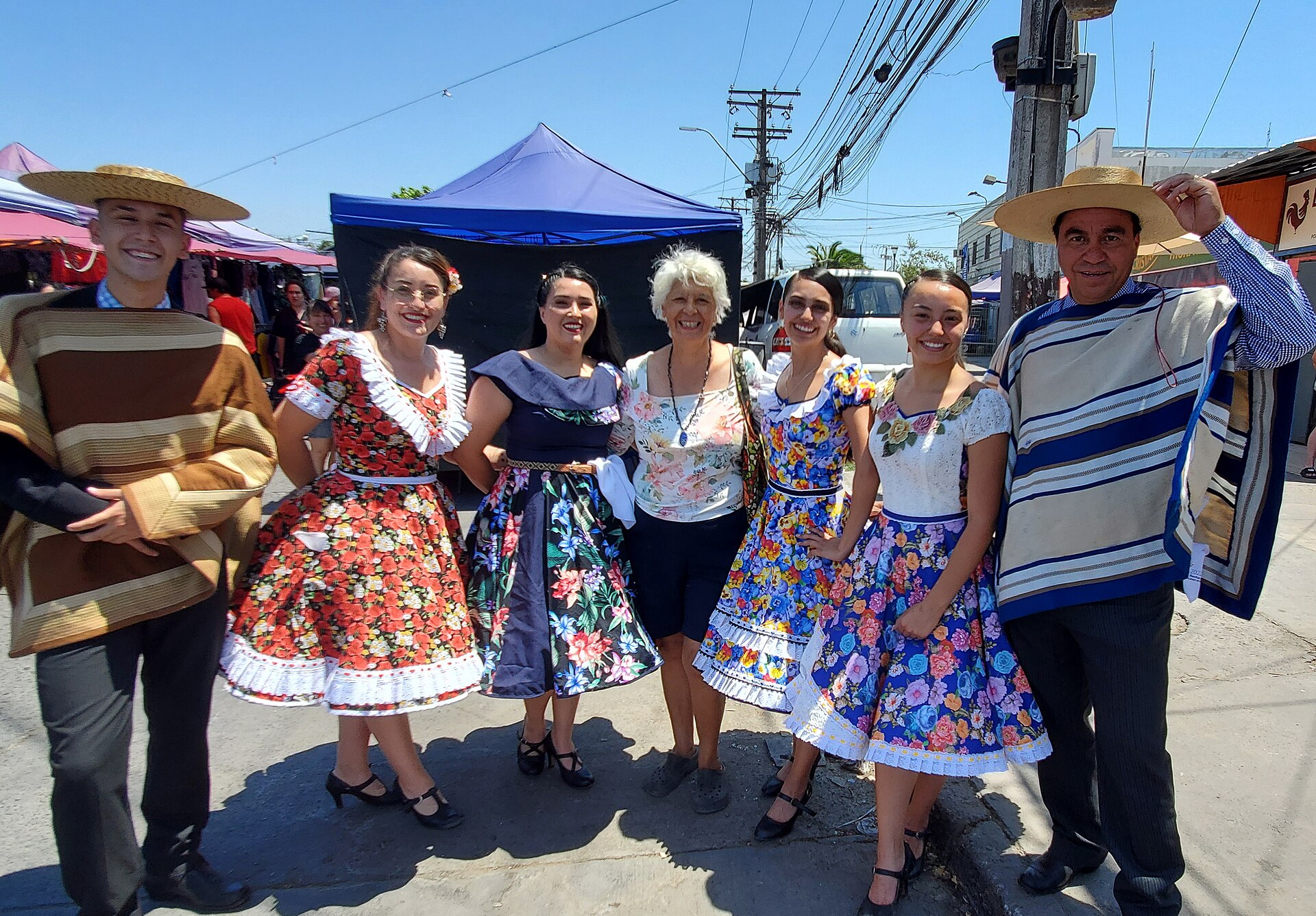
During Fiestas Patrias, fondas, public events and family gatherings turn cueca into an accessible communal activity; do not confuse one performance with the entire tradition.
Southern Mapuche practices demand their own community context. The Chiloé islands are also known for distinctive partner dances including pericona and local cueca variants.
Cueca also appears in Chilote musical life; compare island instruments and songs rather than assuming the central Chilean arrangement.
Rapa Nui is Polynesian: its Sau Sau and Hoko must not be explained as mainland Chilean folklore. Island cultural groups present multiple strands of their living repertoire.
Sau Sau has a documented history of twentieth-century Polynesian interaction and has become an important social and staged dance on the island.