··EN · ES · FA
Tap a region to read its story
Swipe the timeline
Chile’s dance landscape has been formed by Indigenous communities, colonial and republican cultural exchanges, Afro-descendant histories and the Polynesian world of Rapa Nui. These traditions coexist; they do not share one simple origin.
Mapuche and Andean peoples sustained music and movement within their own social and ceremonial systems. Contemporary Mapuche Pürún remains part of a living community tradition; the northern altiplano connects across today’s borders.
Mapuche Pürún and Bailes Chinos can involve spiritual responsibilities. Ask about photography and refrain from reconstructing restricted practices from brief videos.
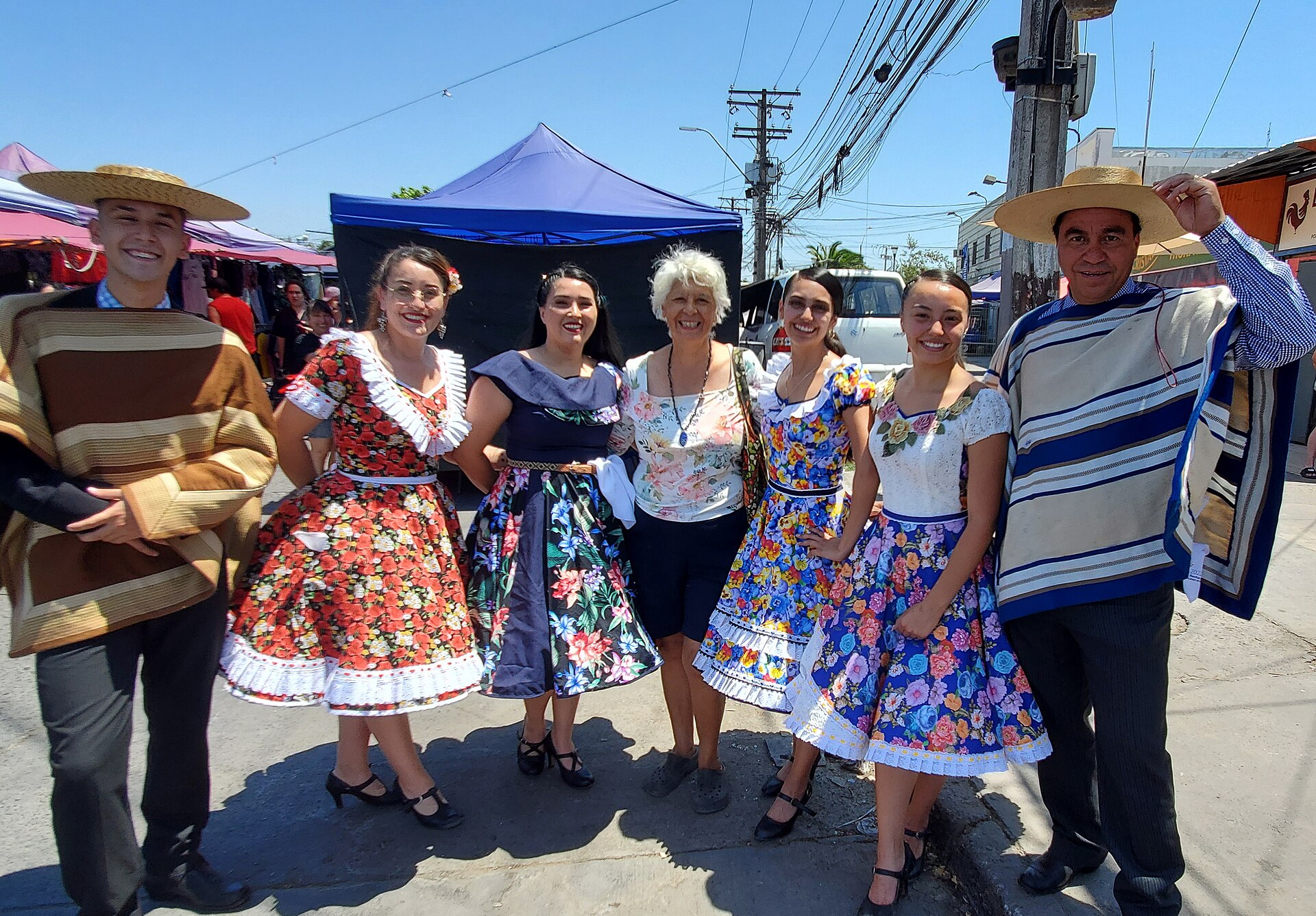
European instruments, popular song forms and local improvisation participated in the evolution of Chile’s couple dances. The cueca has multiple origin theories and regional versions; the government named it the national dance in 1979.
Cueca brava is linked with urban cantores and twentieth-century popular culture. The songs and social setting are integral to the dance.
In the far north, Afro-descendant groups have worked to make their histories visible. Tumbe afroariqueño is a modern living expression of community memory, not a generic label for every drum dance.
Afro-Arican organizations present tumbe and other heritage expressions in civic and cultural gatherings. Attribute performances to the actual groups and avoid treating them as anonymous colour for tourism.
Devotional musician-dancers participate in celebrations associated with the Virgin of Andacollo. Flutes, drums and embodied promises make this an important setting for Chile’s UNESCO-listed tradition.
A major July devotional festival in Tarapacá, with dance fraternities and band music. Diablada is one of several forms; the event cannot be represented by one troupe alone.
The traditional form uses two pairs, coordination and handkerchiefs. Memoria Chilena links it with nineteenth-century regional exchange.
Living repertoires survive through social meetings, local musicians, school groups and community memory, not solely through folkloric stage productions.
Rapa Nui has its own Polynesian histories, language and artistic practices. Sau Sau reflects twentieth-century inter-island exchange; Hoko conveys another expressive tradition. Modern creativity is also heritage.
The Kari Kari cultural ballet and Ma’aranui academy describe their work as transmission to children and young artists. Credit living performers by name.