··EN · ES · FA
Tap a region to read its story
Swipe the timeline
Canadian dance changes with the landscape: cedar Big Houses on the Pacific, fiddles and drums on the Prairies, ballet and street stages in Ontario, gigue in Québec, ceilidhs on the Atlantic and drum dances in the Arctic. Indigenous territories and migration routes cross today’s provincial borders, so these regions are a guide, not a fence.
The coast is home to many nations — Kwakwaka’wakw, Haida, Nuu-chah-nulth, Coast Salish and others — whose dances, crests and songs are inherited rights shown in potlatches. Alert Bay’s U’mista Cultural Centre and the Haida Heritage Centre tell the story of the potlatch ban and the return of seized treasures.
Vancouver is also a centre of contemporary dance — home of Crystal Pite’s Kidd Pivot and Ballet BC — and of street dance: Olympic champion Phil Wizard grew up here.
The Prairies are the homeland of the Métis Nation and of Cree, Saulteaux, Dakota, Blackfoot and many other First Nations. Powwows, Round Dances and jigging contests fill the calendar, from Back to Batoche Days in Saskatchewan to the Calgary Stampede’s Elbow River Camp and Manito Ahbee in Winnipeg.
Ukrainian immigrants made the region the centre of Ukrainian-Canadian dance, with schools in every city and festivals in Dauphin and Vegreville. Winnipeg is also home to the Royal Winnipeg Ballet and the Folklorama festival.
Toronto is home to the National Ballet of Canada, Canada’s National Ballet School, Toronto Dance Theatre and Dance Arts Institute, and to a huge street-dance and multicultural scene. Ottawa, the capital, has its own studios and the National Arts Centre.
Northern and central Ontario are Anishinaabe lands where the Jingle Dress Dance has deep roots, and Wiikwemkoong on Manitoulin Island holds a famous powwow. In the Ottawa Valley, fiddling and step-dancing contests keep a lively regional style, and Maxville hosts the Glengarry Highland Games.
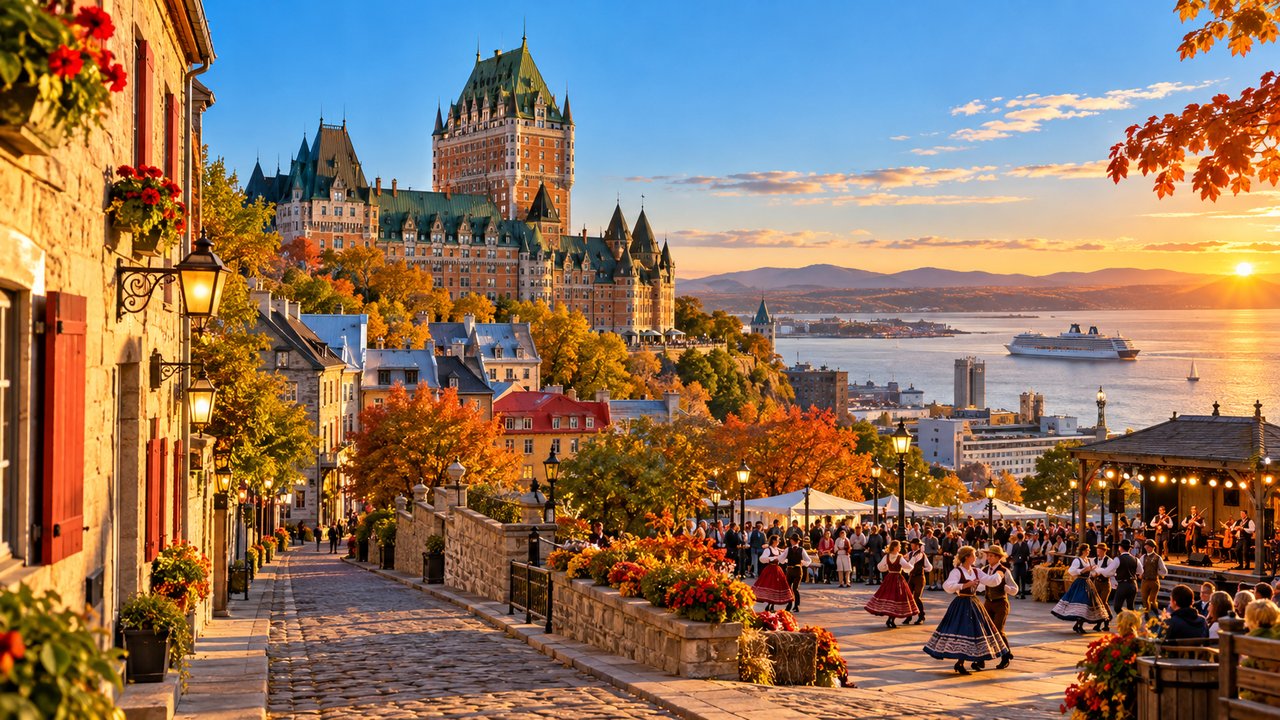
Québec’s francophone traditions — the gigue, called set dances and the veillée — live on in rural festivals, community halls and folk ensembles, and the Carnaval de Québec fills the winter with music.
Montréal is one of the world’s capitals of contemporary dance and home of Les Grands Ballets Canadiens, the École de danse contemporaine and the Festival TransAmériques. Mohawk communities such as Kahnawà:ke hold powwows every summer.
Cape Breton Island is famous for fiddle music, Gaelic culture and close-to-the-floor step dancing at ceilidhs and summer square dances; the Celtic Colours festival fills the island every October, and the Gaelic College at St. Ann’s teaches visitors.
This is also Mi’kma’ki, homeland of the Mi’kmaq, and Acadie, where French-speaking Acadians keep their own songs and dances. Newfoundland and Labrador has its kitchen parties and set dances, and Halifax hosts the Royal Nova Scotia International Tattoo.
Yukon, the Northwest Territories and Nunavut are home to Inuit, Dene, Gwich’in, Tlingit and other peoples. Inuit drum dancing — with a large frame drum struck on its rim — is performed at community feasts and festivals, and Dene drum dances and hand games are central to northern gatherings.
These traditions deserve their own careful, community-sourced documentation and should not be confused with southern powwow styles. DANZO welcomes verified contributions from northern knowledge holders.