··EN · ES · FA
Tap a region to read its story
Swipe the timeline
Seven places to discover Argentina: Buenos Aires and Caminito, Iguazú Falls, the Quebrada de Humahuaca, Bariloche, the Perito Moreno Glacier, Patagonia’s Fitz Roy and Ushuaia at the end of the world.
Buenos Aires is the capital of tango. Caminito’s painted houses in La Boca recall the immigrant port neighbourhood where tango grew, and on Sundays dancers perform at San Telmo’s antiques fair around Plaza Dorrego.
For real social tango, go to an evening milonga — many begin with a class for beginners — and in February join the murga corsos in the barrios.
On the border with Brazil, the Iguazú Falls are a chain of about 275 waterfalls in the subtropical forest of Misiones, a UNESCO World Heritage Site.
Misiones and neighbouring Corrientes are the heartland of chamamé, the accordion music of the Litoral; Guaraní culture and Jesuit mission ruins are part of the region’s story.
This colourful Andean valley in Jujuy has been a route of trade and culture for 10,000 years and is a UNESCO World Heritage Site since 2003.
At carnival, comparsas dance carnavalitos and huaynos through Humahuaca, Tilcara and Uquía, and peñas fill with zambas and chacareras.
San Carlos de Bariloche sits on the shore of Lake Nahuel Huapi, in Argentina’s oldest national park, surrounded by Andean forests and peaks.
‘Nahuel Huapi’ is a Mapuche name; Mapuche communities, whose ceremonies are private, keep their culture alive across northern Patagonia.
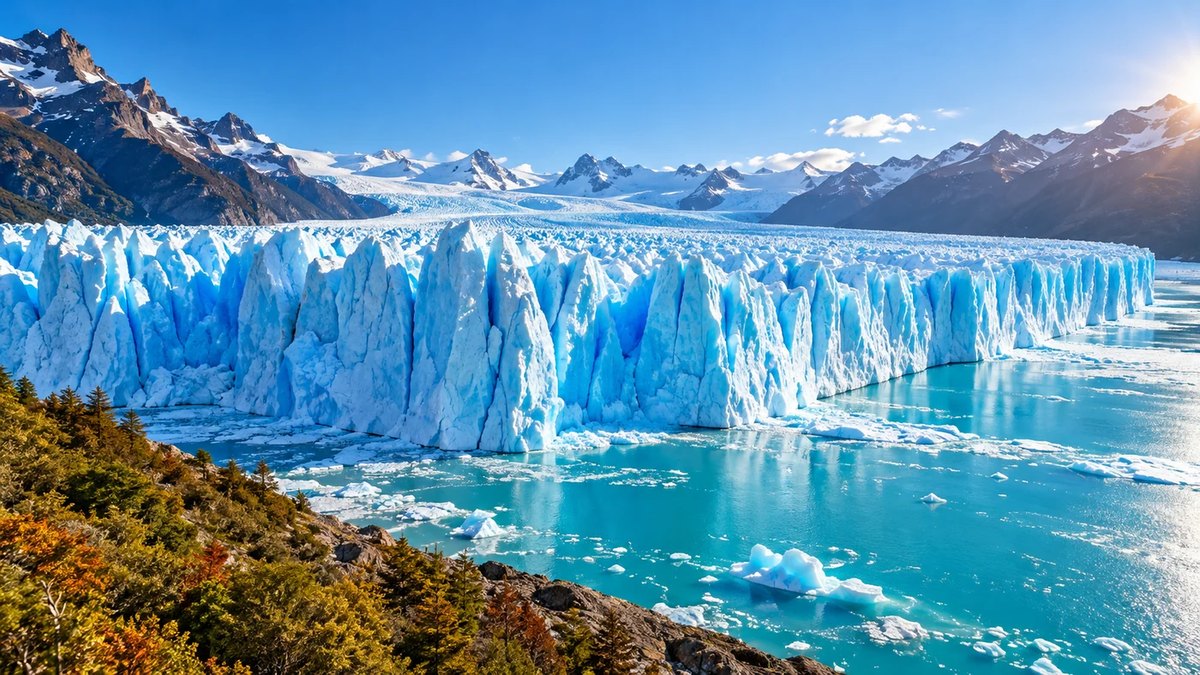
Near El Calafate in Santa Cruz, the Perito Moreno Glacier ends in a 5 km-wide ice front about 70 m high, from which huge blocks crash into Lake Argentino.
It is a natural wonder rather than a dance place, but southern towns celebrate with peñas, folk music and regional festivals.
Mount Fitz Roy (Chaltén) rises above the village of El Chaltén, founded in 1985, Argentina’s trekking capital. Rivers, forests and open steppe shape southern Patagonia.
Patagonia’s Indigenous peoples — Tehuelche, Mapuche and others — have their own music and ceremonies; visitors should learn from community voices rather than ‘tourist dances’.
Ushuaia, capital of Tierra del Fuego, lies on the Beagle Channel between mountains and sea — the gateway to Antarctica.
The Yámana (Yagán) and Selk’nam peoples lived here long before the city; museums in Ushuaia tell their story and that of the old prison.